Body
The last thing Justin remembers is being on his bike.
He was training for a triathlon after months of preparation. An avid cyclist, runner and hiker, Justin loved being outdoors. Even with a stiff neck and a worsening headache, he decided to ride.
Then, everything went black.
Justin woke up in the hospital. He had experienced a subarachnoid hemorrhage on the left side of his head — a type of stroke involving bleeding in the space between the brain and the skull. He also sustained a concussion due to falling off his bike.
Although he struggled to walk and had limited use of his right hand, he was told the brain bleed was minor and that he would recover with rest. Four days later, he returned home without rehabilitation or follow-up care.
Searching for Answers
Body
Over the next six months, Justin’s symptoms intensified. He developed vertigo, extreme sound sensitivity and blurred vision. His right hand shook so much he struggled to write, tie his shoes or use utensils. His headaches became so intense that he had to close himself up in a dark room with an ice pack pressed to his head each night.
Justin sought help repeatedly — first in the emergency room, then from his primary care physician and finally from a neurologist, who performed an MRI. When the results came back normal, Justin felt a complicated mix of relief and disappointment. He had hoped the MRI would provide an explanation for his worsening symptoms. Instead, he was told once again that nothing was wrong with him — he simply needed more time to recover.
Frustrated and alone, Justin attempted to diagnose himself. He listened to brain injury podcasts and sought one medical opinion after another, but every new evaluation and treatment plan led to another dead end.
Some specialists even suggested that his symptoms were imaginary.
“You get really worn out, being told it’s all in your head,” said Justin. “I was getting to the point where I thought, ‘Is this what my life is going to be? Am I ever going to get better or get unstuck?’”
Connecting the Dots
Body
Everything changed nearly two years after the stroke when an orthopedic specialist recognized that Justin’s symptoms pointed to more complex neurological issues and referred him for outpatient therapy at Shirley Ryan AbilityLab’s Burr Ridge Outpatient & DayRehab Center®.
Given Justin’s stroke and ongoing symptoms, he started working with a physical therapist (PT) who specializes in brain injury and stroke rehabilitation. His PT helped him tackle the dizziness, balance problems, light sensitivity and fatigue that had lingered since his stroke and concussion.
Justin could walk, but stairs were another story. His movements were no longer automatic, so climbing stairs consumed all of his cognitive energy. He recalls standing at the bottom of his basement stairs and not remembering how to lift his foot onto the first step.
Through carefully designed exercises, Justin’s PT gradually exposed him to the movement and visual stimuli that triggered his symptoms, helping his brain relearn how to process them. He also challenged Justin with progressively demanding physical and cognitive tasks designed to rebuild endurance.
To rebuild strength and coordination in his right hand, Justin’s occupational therapist (OT) used techniques like mirror therapy, in which he performed exercises with his left hand while watching its reflection in a mirror to help trick his brain into thinking he was moving the right hand. She also had Justin experiment with using different pens, writing tools and wrist weights to make daily tasks easier.
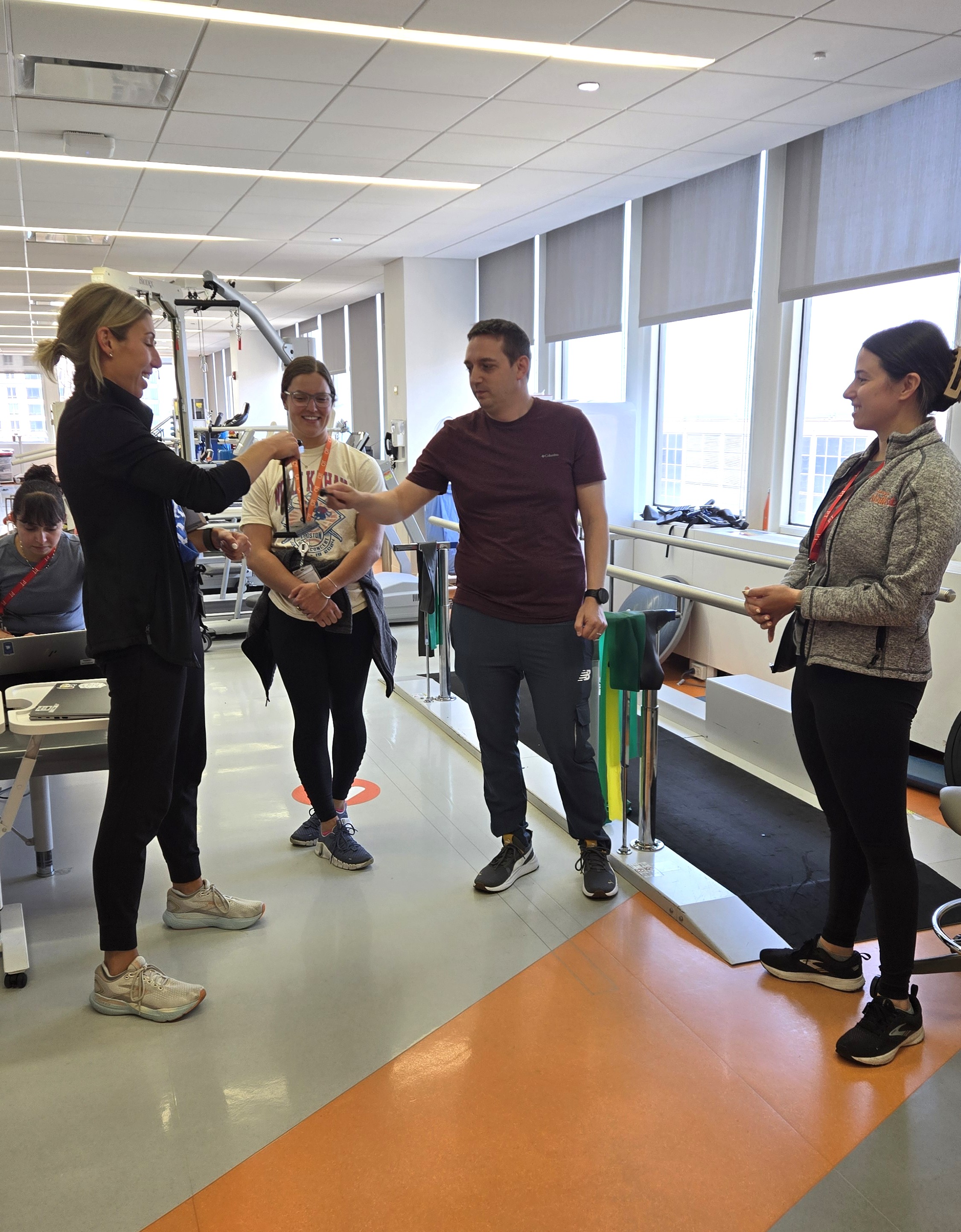
Despite his progress, Justin continued to report a wide range of persistent symptoms. His PT encouraged him to consult a movement neurologist to determine whether another underlying condition was contributing to his impairments.
The detailed observations and documentation from Justin's therapy team at Shirley Ryan AbilityLab provided critical information that helped his movement neurologist finally reach a diagnosis: functional movement disorder (FMD).
FMD affects how the brain and nervous system control movement. The condition can cause tremors, weakness, balance problems and cognitive challenges. While the symptoms are very real, they aren’t caused by damage to the nerves or muscles.
For Justin, the diagnosis brought the validation he had been missing. It also meant he would finally get the care he needed to truly begin healing and move on with his life.
Building a Toolbox for Recovery
Body
Justin enrolled in Shirley Ryan AbilityLab’s intensive Functional Movement Disorder Clinic, where he learned practical strategies for managing symptoms. Through mindfulness and breathing exercises, mental imagery, progressive muscle relaxation and distraction techniques, he learned how to calm his nervous system and redirect his focus when symptoms began to emerge.
One strategy that proved especially effective was mental imagery, where Justin practiced imagining himself completing tasks smoothly, confidently and without symptoms before performing them.
Sessions centered on activities from his daily life. Justin practiced work-related tasks such as reading, typing and shifting his attention between a computer screen and written materials in busy, distracting environments. He also worked through complex everyday activities, including planning a meal, grocery shopping and preparing food — activities that challenged his memory, vision, balance and endurance.
By the end of the program, Justin had developed a personalized toolbox of strategies he could use to independently manage his FMD symptoms.
A Team Approach to Recovery
Body
Justin’s care expanded beyond physical and occupational therapy to include vocational rehabilitation, which enabled him to continue working while managing his symptoms. As the technical services manager for a major distributor of restaurant, HVAC and residential appliance parts, Justin worked in a loud and busy shared office environment without private space.
Justin’s vocational rehabilitation counselor helped him identify his workplace challenges, including tremors, fatigue and concentration difficulties. She educated him on accommodations he didn’t know were available to him and helped him develop a plan to discuss his needs with his employer.
As a result, Justin secured greater flexibility to work remotely during symptom flare-ups. He also scheduled breaks to manage fatigue, used quieter workspaces and had regular check-ins with his supervisor. These accommodations gave Justin the support he needed to continue excelling in a job he loved.
Building Strength for Everyday Life
Body
Over the next year and a half, Justin continued participating in outpatient physical and occupational therapy at Shirley Ryan AbilityLab. One of the goals that mattered most to him was caring for his recently adopted dog, Lola.
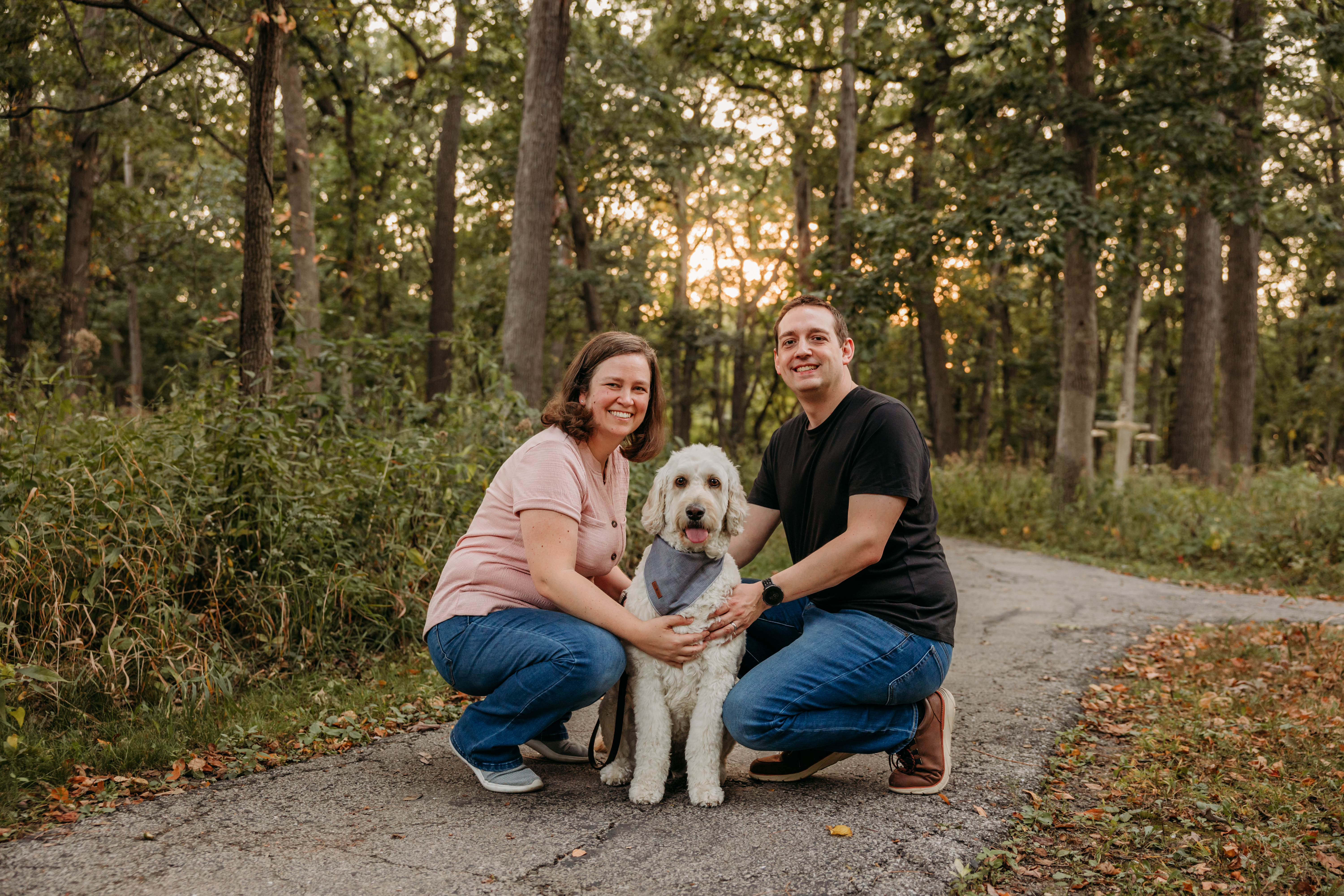
His care team designed therapy centered on practical, real-world challenges. Justin practiced walking on uneven surfaces, navigating obstacles, changing directions quickly and responding to unexpected movements — skills that mirrored the demands of walking Lola and staying active in his community.
Justin’s team also helped him develop personalized strategies for managing his sensory sensitivities. He can now attend church, dine out and participate in community activities with far fewer limitations, allowing him to reconnect with the world around him and enjoy ordinary experiences.
Rediscovering Joy
Body
Justin’s care team credits much of his success to his determination and commitment to hard work. He diligently practiced his exercises at home, tracked his progress and arrived at each therapy session ready to learn. Combined with the coordinated support of his Shirley Ryan AbilityLab interdisciplinary team, that dedication helped him achieve milestones that once felt impossible.
By the end of therapy, Justin had significantly improved his balance and reduced his risk of falling. He was comfortable walking Lola, completing household and yard work, and participating in activities he enjoyed, including indoor rock climbing and playing soccer with his wife, Danielle.
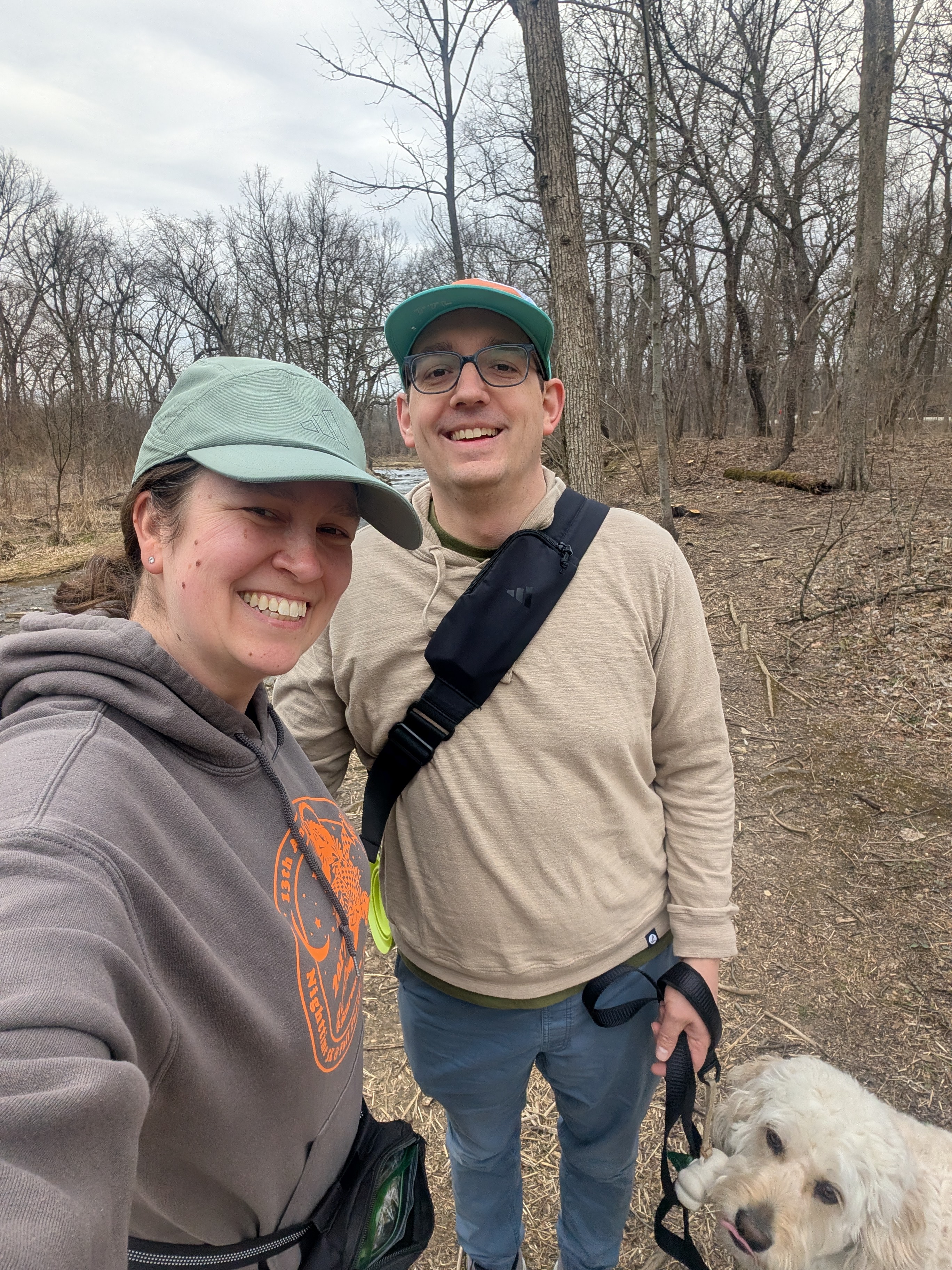
His journey taught him not only to slow down and see life from a new perspective; it also gave him something he feared he had lost: joy.
"Shirley Ryan AbilityLab really transforms people's lives," said Justin. "I've gotten joy back in my life because of the help I got there. I wouldn't be doing the things that I am now without it."
Justin continues building his endurance and looks forward to spending more time biking and hiking with Danielle. He hopes to assemble a team for SkyRise Chicago 2026, Shirley Ryan AbilityLab’s annual stair-climb at the Willis Tower that raises funds to support the hospital’s mission.
Thanks to the generosity of donors like you, Justin received the collaborative, specialized care that helped him reclaim his independence, his joy — and his future.