Body
Jake H. was diagnosed with Type 1 diabetes when he was only 15 months old. He is insulin dependent, requiring him to take daily insulin to manage his blood sugar.
Growing up, Jake didn’t let the diabetes diagnosis slow him down. He was raised in an active family in Chicago’s north suburbs, the oldest of four siblings. Jake was always into sports, including playing hockey, soccer and lacrosse; serving as a counselor at a sailing camp while in high school; and going alpine skiing with his family each winter in Idaho.
Jake graduated from the University of Colorado Boulder with a degree in economics and then moved back to Chicago after college, pursuing a job as an analyst and living in the city with a college friend and his younger brother, Stuart.
Altogether, Jake led a busy lifestyle and had a promising career ahead of him while living with Type 1 diabetes, until his health journey took a serious turn at age 27.
From Anoxic Brain Injury to Starting Rehabilitation
Body
One day, in the summer of 2022, Jake was not feeling well. He became sick and dehydrated. Stuart came home after work to find Jake extremely ill. He immediately called their mom, Amy. Amy rushed to her sons' apartment and, upon seeing Jake's condition, she quickly called 911.
At the hospital, Jake's family learned he had gone into diabetic ketoacidosis (DKA). DKA is a serious medical emergency for people with Type 1 diabetes. While in the emergency room waiting for a room, Jake aspirated and went into cardiac arrest. He experienced an anoxic brain injury due to his brain being deprived of oxygen. Not only had the situation escalated quickly, but Amy also recognized the long-term impact on Jake would be significant.
“Jake spent more than eight weeks in intensive care, losing almost 40 pounds of body weight,” said Amy. “We were not sure if he could speak, as he was intubated for almost two weeks and later had a tracheotomy to help him breathe. He also was being fed through feeding tubes.”
In addition, Amy said the brain injury affected the left side of Jake’s body, causing major balance issues. In fact, Jake could no longer walk on his own.
Once Jake stabilized medically, he had a challenging recovery ahead of him and was referred to Shirley Ryan AbilityLab to begin his rehabilitation journey.
Jake Progresses Through Rehabilitation Levels of Care
Body
One of the benefits of Shirley Ryan AbilityLab is that it offers three rehabilitation levels of care — including inpatient, DayRehab and outpatient therapy — as patients like Jake make improvements in their physical and cognitive function and progress through their recovery.
Jake first arrived at Shirley Ryan AbilityLab for six weeks of intensive inpatient rehabilitation that included multiple daily sessions of physical therapy and occupational therapy, as well as swallow therapy with a speech-language pathologist.
“Jake’s care plan was aggressive, but we knew we needed to see what he would be able to do and what abilities he could recover with his therapies,” said Amy. “He worked with a therapist on swallowing to be able to eat a regular diet again. His physical and occupational therapists worked with him on movement and how to begin walking again.”
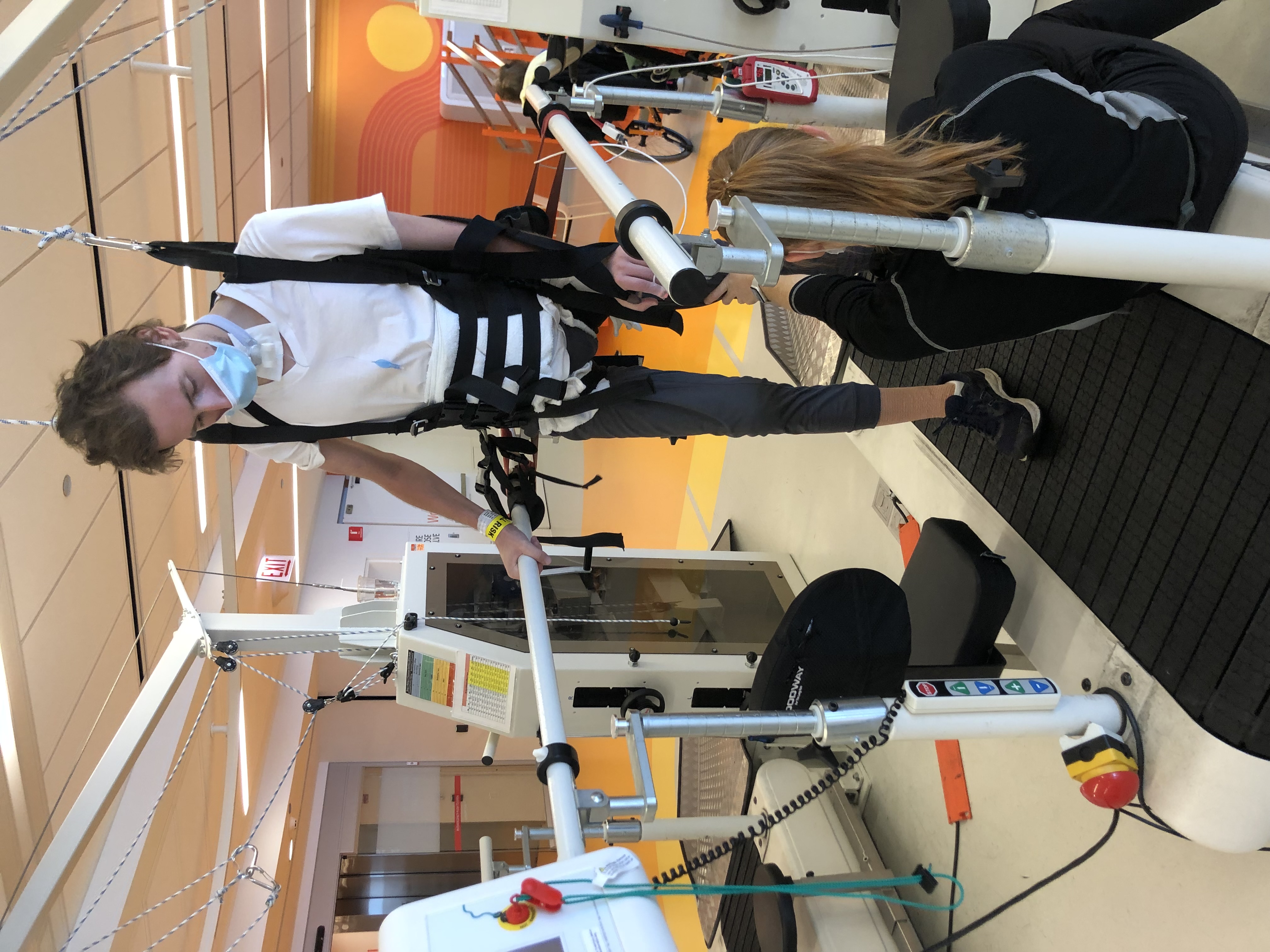
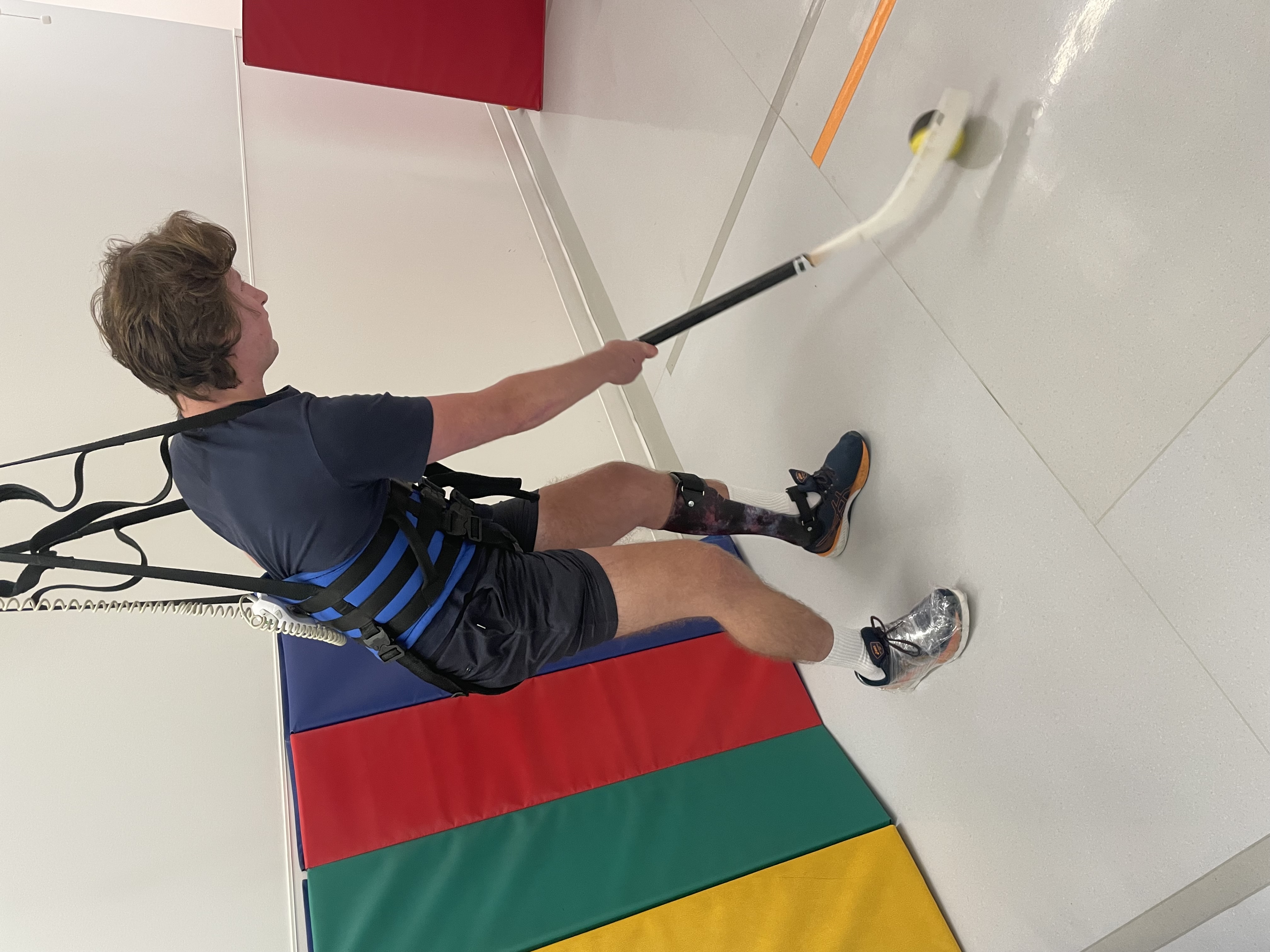
After inpatient care, Jake transitioned to Shirley Ryan AbilityLab’s Glenview DayRehab Center® for a full year. This allowed him to move back in with his family in the north suburbs so they could help to care for him, while he participated in intensive therapy five days a week to build upon his skills. He then continued to receive additional outpatient physical and occupational therapy at Shirley Ryan AbilityLab’s Northbrook Outpatient Center.
As Jake progressed, he said his therapy became about learning how to adapt to the lasting effects of the brain injury while continuing to challenge what he was capable of doing.
“Therapy helped me realize that recovery isn’t one big breakthrough — it’s a lot of small improvements that build on each other,” he said. “There were things I couldn’t do at all when I first got to Shirley Ryan AbilityLab that I gradually started doing again. My therapists kept pushing me to work toward more independence, even when progress felt slow, and that helped me see how far I had actually come.”
Jake Finds Adventure Through Adaptive Sailing
Body
Today, Jake continues to live with his family to support his medical needs. He requires the assistance of a gait belt and cane for walking, and Amy said they are optimistic that someday he will walk on his own.
Jake has a full schedule of therapies, activities and support that continue to make a difference for him, but he acknowledges that his life has changed dramatically since experiencing a brain injury.
“Activities that once felt routine suddenly became challenging, and there were times when it was difficult to imagine returning to the things I loved,” said Jake.
Fortunately, one year after his brain injury, Jake saw a poster about the Judd Goldman Adaptive Sailing Program at Shirley Ryan AbilityLab. He immediately signed up for an open house. Jake had attended sailing camp as a kid and became a sailing counselor in high school, so adaptive sailing on Lake Michigan naturally piqued his interest.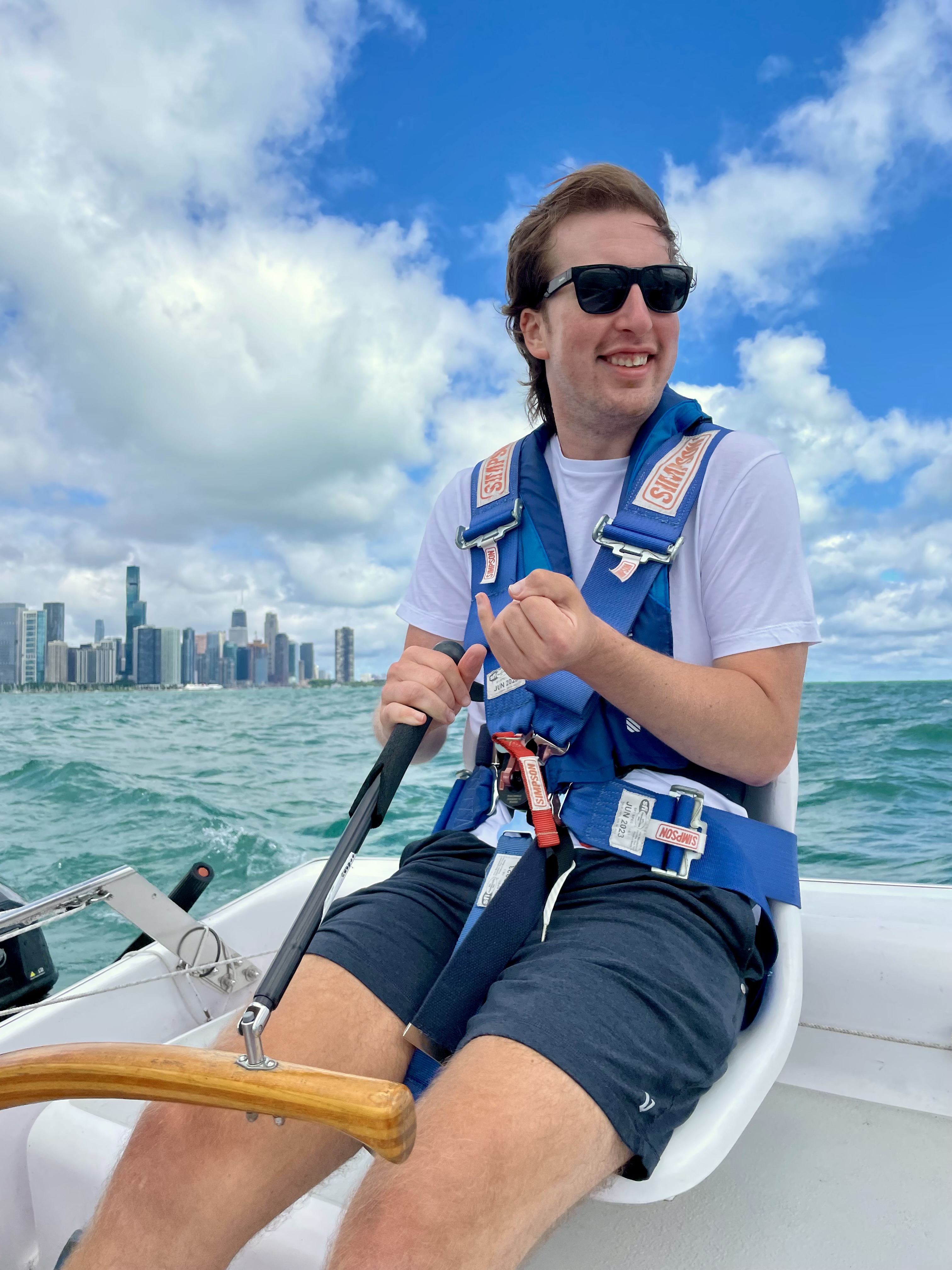
The adaptive sailing program offers classroom and on-the-water instruction, races and leisure cruises for youth and adults with impairments. Specially designed, accessible sailboats include transfer-boarding benches to assist sailors as they move from wheelchairs to seats aboard; counterweighted seats; chest and waist belts for added stability and safety; and other safety features.
Jake quickly became involved in adaptive sailing. He has taken 30 lessons during the last few years, which adds up to approximately 10 excursions on Lake Michigan per summer season.
“Adaptive sailing has had a profound impact on my life over the past several years,” said Jake. “It gave me an opportunity to reconnect with a sense of independence, adventure and confidence that I thought I had lost.”
Jake said one of the most important things he has gained from the program is a renewed belief in his own abilities, as sailing requires focus, communication and trust, while rewarding patience and persistence.
“Being out on the water reminds me that progress does not always happen all at once. Sometimes you adjust your course little by little, and over time those small adjustments carry you farther than you ever expected,” he said. “Adaptive sailing has shown me that even after a life-changing injury, I am still capable of learning new skills, overcoming obstacles and enjoying meaningful experiences.”
In addition, Jake has met a community of volunteers, instructors and fellow sailors via adaptive sailing, which he said, “has been just as valuable as sailing itself.”
“Adaptive sailing has absolutely been a game changer for Jake, getting to do something that he really enjoys and the feeling you get out on the water,” said Amy.
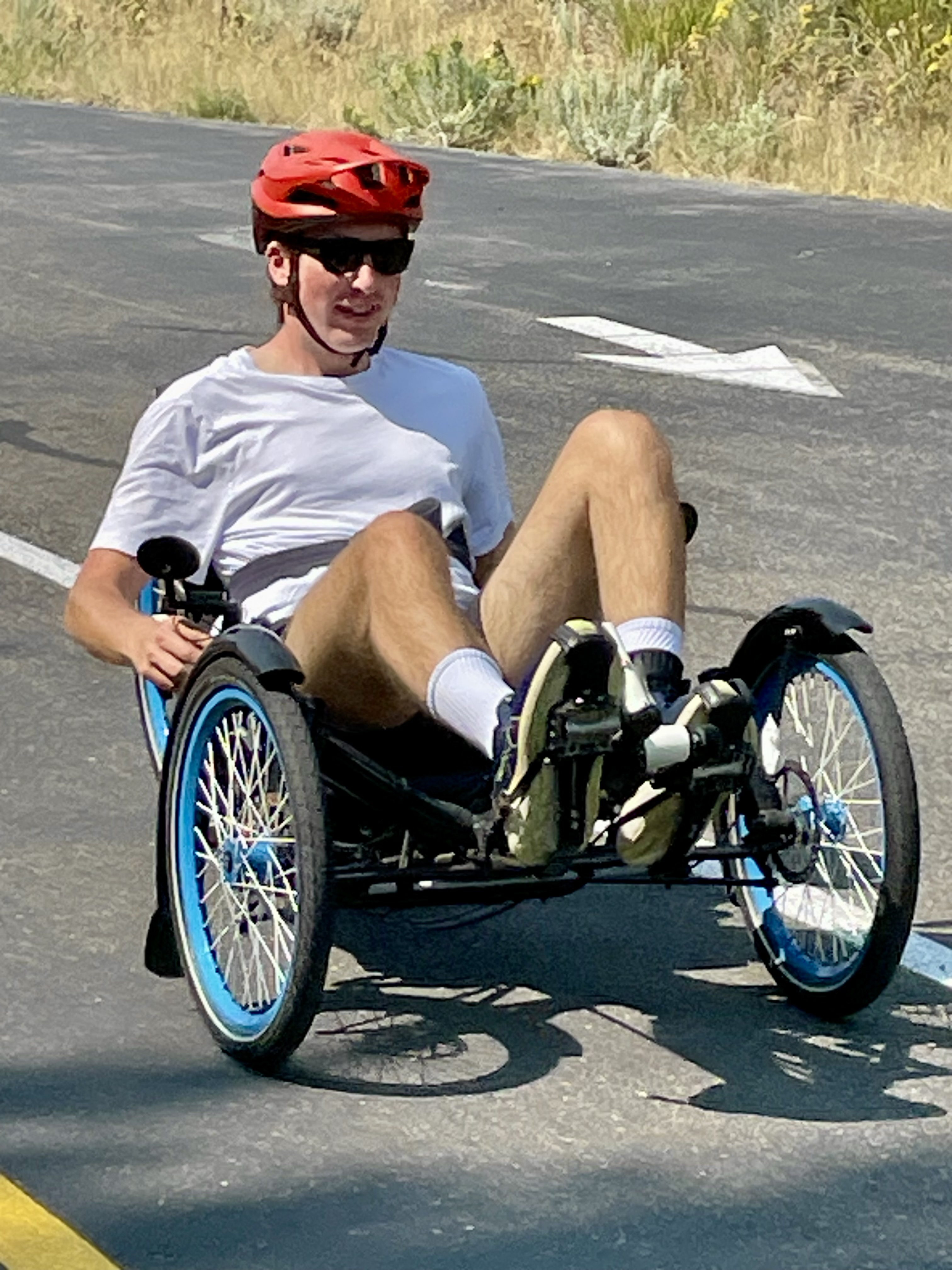
Beyond adaptive sailing, Jake was introduced to adaptive cycling and adaptive skiing. He also participates in functional fitness programs at Shirley Ryan AbilityLab’s Adaptive Sports & Fitness Center to work with exercise physiologists on meeting his overall fitness and health goals.
“Shirley Ryan AbilityLab’s facilities, adaptive sports, functional fitness programs, therapies and activities — as well as all of the doctors and therapists Jake has been introduced to — have made this health journey more manageable with the unimaginable situation that he and our family have faced,” said Amy.
As for the future, Jake said he hopes to continue building on the progress he has made, to keep challenging himself with new experiences, to create meaningful memories with his family and friends — and to keep moving forward one step at a time.
“Adaptive sailing has reminded me that life after injury can still be full of growth, achievement and adventure,” he said.