Body
A recent article published by AARP The Magazine highlighted how new treatments for stroke are showing promise by harnessing neural plasticity — the brain’s potential to rewire itself after injury.
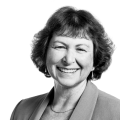
The article featured insights from Leora Cherney, PhD, CCC-SLP, BC-ANCDS, FACRM, scientific chair of the Robert R. McCormick Foundation Think + Speak Lab at Shirley Ryan AbilityLab and the founder and director of the hospital’s Center for Aphasia Research & Treatment.
In the AARP article, Dr. Cherney explained how ongoing practice and therapy benefits patients with aphasia — a communication disorder that can occur after stroke that impacts a person’s ability to read, write or speak. She illustrated how science and care have evolved in the treatment of aphasia since she began her career in 1981, when understanding of the brain’s “internal architecture” was limited.
“We didn’t really understand how different parts of the brain could be connected to each other and to different pathways within the brain,” Dr. Cherney said.
Dr. Cherney developed a treatment called ORLA (Oral Reading for Language in Aphasia) — a therapy that uses intensive repetition and “choral reading” to help individuals with aphasia work toward producing sentences independently.
“Even though we didn’t know a lot about neural plasticity at that time, repetition and a lot of practice was really, really important,” she added.
Today, a computerized version of ORLA is widely used for aphasia rehabilitation and has significantly improved outcomes for people with aphasia. In fact, Dr. Cherney noted that patients who initially could not speak, read or write after a stroke are, years later, “able to speak in sentences, read a book, and text their family members and friends.”
In addition to featuring Dr. Cherney’s contributions to the treatment of aphasia, the AARP article described how Evan Houldin, PhD, a postdoctoral researcher at Shirley Ryan AbilityLab, is using a functional near-infrared spectroscopy brain imaging device to measure a patient’s brain activity during therapy sessions. The article also highlighted Shirley Ryan AbilityLab’s aphasia conversation groups — sessions held virtually and in person to provide individuals with aphasia an opportunity to talk, connect and practice communication with one another in a supportive environment.
“I remember when I first started, no words, nothing. But every year, a little more. Syllables and bigger words. Now I’m 15 years since I have a stroke and now easier to talk, more sentences, bigger words, and it’s just practice,” said one aphasia conversation group participant who was cited in the AARP article.
Read the full AARP article and learn more about how Shirley Ryan AbilityLab’s Center for Aphasia Research & Treatment has been helping people with aphasia achieve better outcomes for more than 25 years.