Body
A recent study in the journal Nature Electronics highlighted new wireless bioresorbable technology designed to deliver carefully controlled electrical stimulation to muscles and nerves — including those involved in breathing.
Shirley Ryan AbilityLab physician-scientist Colin Franz, MD, PhD, is one of the co-senior authors of the study, published in June 2026.
Wireless bioresorbable systems for electrical stimulation are temporary implants that can deliver electrotherapy. These implants have been used previously in neuroregeneration, as well as cardiac pacing to help regulate the heartbeat.
In this latest research, Dr. Franz, John Rogers, PhD, from Northwestern University, and other co-authors introduce a new system that can be powered wirelessly and that uses near-infrared light to pass through tissue while delivering electrical stimulation to muscles and nerves.
Notably, the research explored using the new technology for diaphragm muscle pacing to control breathing and for neuromodulation programs to regulate breathing rhythm. The technology was utilized in animal models in the study, and future research could explore benefits to patients in rehabilitation who are recovering from a condition that may impact their ability to breathe, such as a spinal cord injury.
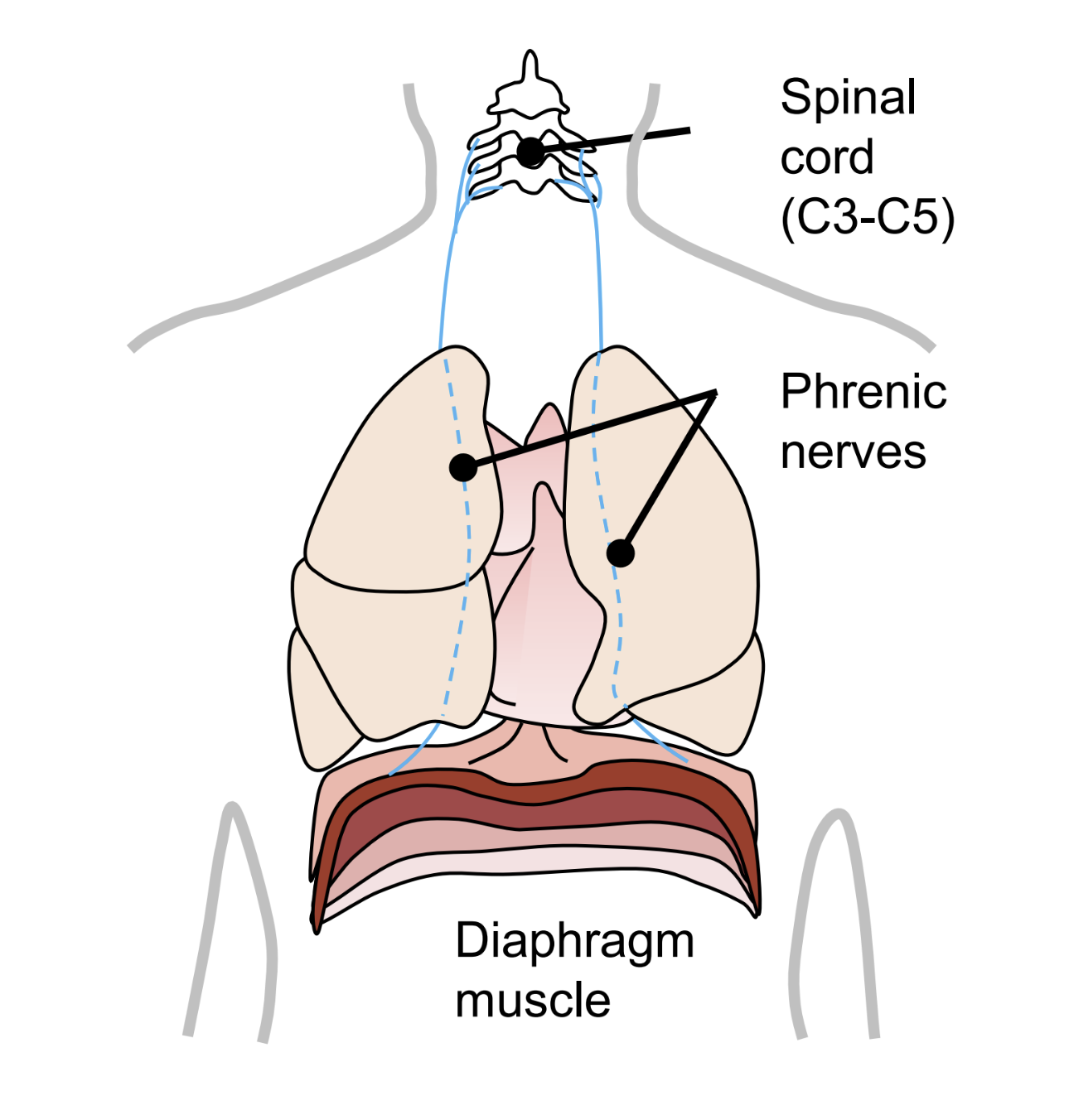
The new technology allows clinicians to control the electrical stimulation, including the type, timing and pattern of electrical pulses it sends in the body. Additionally, the bioresorbable implant is designed to break down naturally in the body after it is no longer in use, reducing the risk of long-term device complications and eliminating the need for a follow-up procedure to remove it.
“Current diaphragm pacing technologies require percutaneous wires that pass through the skin into the body, creating potential risk for infection or displacement of the device, and offer limited flexibility in how stimulation is delivered,” said Dr. Franz.
“This new wireless, programmable approach could address many of those challenges, enabling clinicians to precisely tailor stimulation patterns to individual patients while simplifying device management. Ultimately, advances like this may help make diaphragm stimulation a more effective and accessible treatment option for patients recovering from conditions that affect breathing,” he continued.
This latest research builds upon Shirley Ryan AbilityLab’s broader clinical research efforts focused on respiratory muscle weakness, diaphragmatic ultrasound and ventilator liberation. In fact, as one of the few rehabilitation hospitals in the United States to accept patients on ventilatory support, Shirley Ryan AbilityLab has pioneered a novel approach to ventilator weaning that taps into the hospital’s clinical and research expertise.
“This research is a natural next step in discovering novel ways technology can be used to activate the breathing muscles during a patient’s recovery — including during ventilator weaning — and help them move toward breathing independently once again,” said Dr. Franz.
This research was supported by the Querrey-Simpson Institute for Bioelectronics at Northwestern University, as well as a National Research Foundation of Korea grant and grants from the National Institutes of Health. It also was supported by a generous gift from the family of Belle Carnell, which established a regenerative neurorehabilitation fund for precision medicine in Dr. Franz’s Regenerative Neurorehabilitation Laboratory at Shirley Ryan AbilityLab. Read the full paper.