Body
In a recent collaboration with the Parkinson’s Foundation, Shirley Ryan AbilityLab clinicians participated in a public service announcement (PSA), “Find Real Answers,” as part of a campaign to provide evidence-based answers to the questions people living with Parkinson’s disease (PD) have throughout every stage of the disease.
In addition to being featured in the PSA, Benjamin Friedman, MD, attending physician and medical director of the hospital’s Parkinson’s Disease & Movement Disorders Program, and Aleksandra Gebska, manager of adaptive fitness programs at Shirley Ryan AbilityLab, contributed articles to the Parkinson’s Foundation’s “My PD Story” series.
The articles, excerpted below, include insights about their professional journeys and how they connect with the PD community today.
Meet Dr. Friedman: Personal Connection Drives Focus on Parkinson’s Care
Body
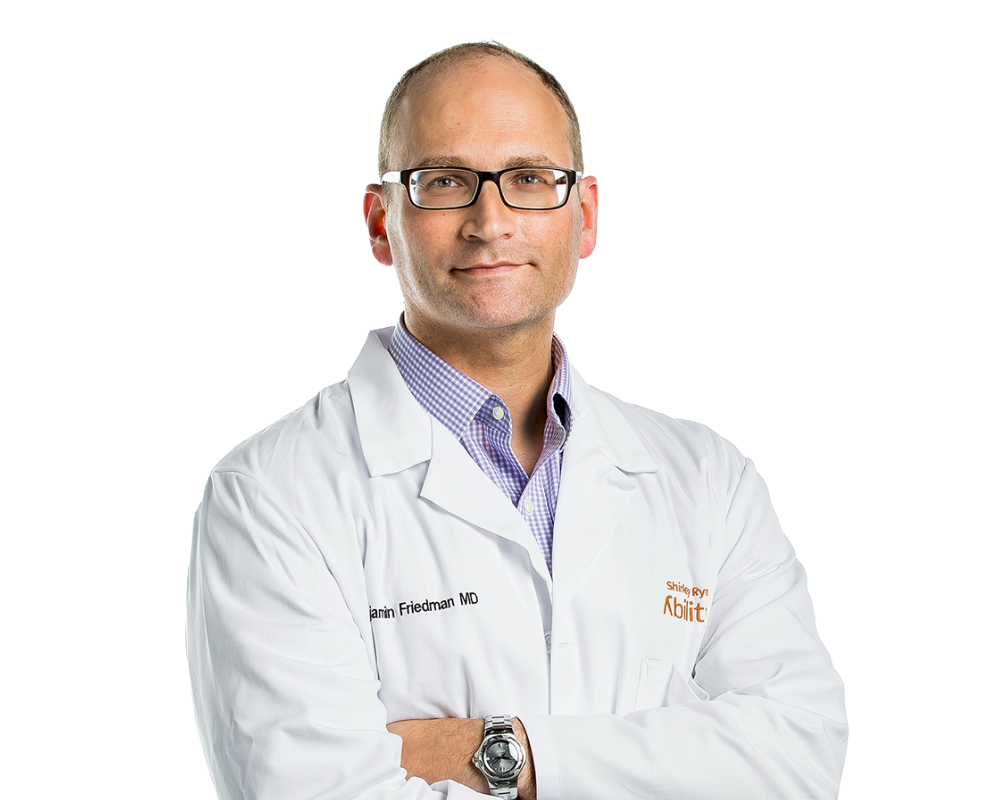
I have always been involved in caring for people with Parkinson’s Disease (PD). I was fortunate to grow up surrounded by elderly relatives, including my grandfather, who was diagnosed with PD at a relatively early age.
I witnessed how important mobility was for my grandfather’s well-being and how my grandmother was a force in his life. She was his strongest advocate. One memory I have of her support is when she would have me take him to the local pool to work on his strength and balance in the water.
Once I decided to go to medical school, I was drawn to physical medicine and rehabilitation where the focus was on restoration and maximizing function.
When I joined Shirley Ryan AbilityLab in 2018, the director of the Parkinson’s Disease & Movement Disorders (PDMD) Program asked if I would be one of the clinicians in the program, and I have been a part of the PDMD clinic ever since. Today, I serve as the medical director of the program, and I am proud to work with the PD community each day.
Our work in the PDMD Program is built on an interdisciplinary approach. Our team of physicians; physical, occupational and speech therapists; psychologists; and exercise physiologists all work together to identify customized personal recommendations for our patients.
We have a unique system with multiple levels of care: inpatient rehabilitation, day rehabilitation and outpatient care, as well as functional fitness classes to help meet this diverse population’s functional needs. We recognize that not everyone has the same level of support at home, and we tailor our care accordingly.
Once again, I always go back to my childhood and how my grandmother cared for my grandfather with PD. She often said, “It’s about the quality of life, not just quantity.” I remember her mantra daily. It serves as a reminder to me that members of the PD community are resilient and always looking for ways to improve their quality of life.
Read Dr. Friedman’s “My PD Story” in full to learn more about his personal journey into medicine, exciting PD research and his team’s work with the broader PD community.

Meet Aleks Gebska: ‘Exercise is Medicine’ for the Parkinson’s Community
Body
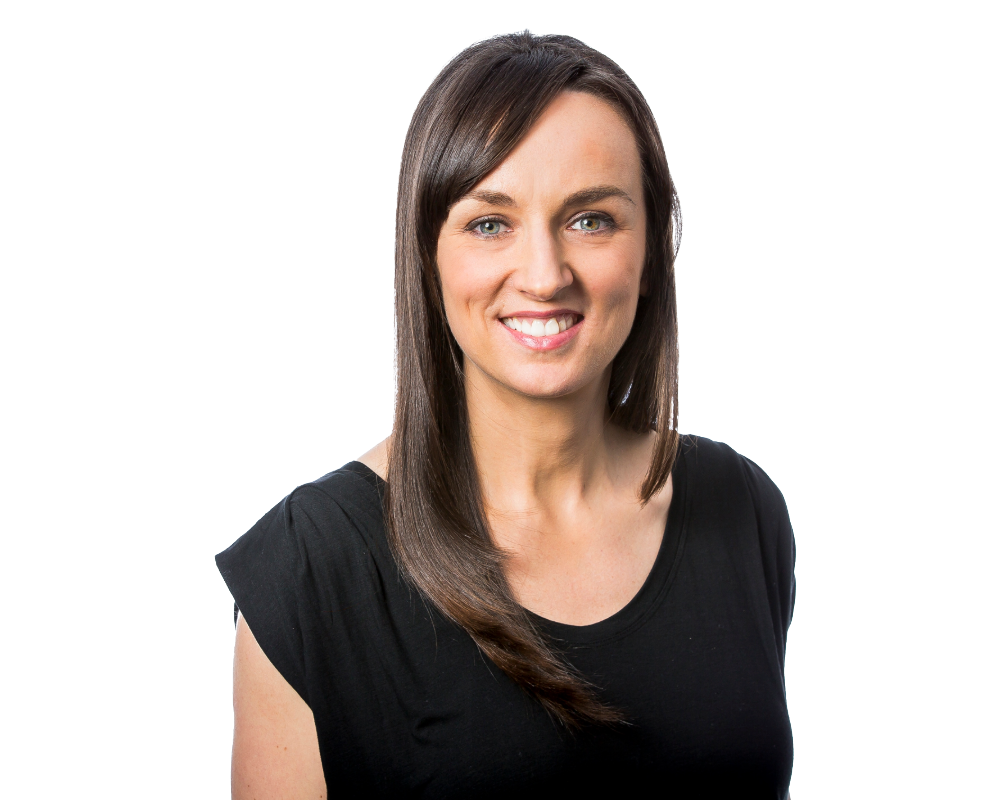
I’m inspired to work with individuals living with Parkinson’s disease (PD) because I see how profoundly exercise can change the trajectory of their lives.
In my role as manager of adaptive fitness programs at Shirley Ryan AbilityLab, I oversee, develop and continuously evolve exercise programs for people living with neurological and orthopedic conditions, including Parkinson’s.
My primary goals are to make sure that every person has access to safe, appropriately challenging exercise — and to help them create long-term, consistent exercise habits. I work with people across the entire spectrum of PD, from those in their 40s with early-onset PD to those in very advanced stages who require significant physical support.
For people with PD, exercise truly is medicine … and the benefits are numerous:
- Regular, properly prescribed movement helps people with PD manage symptoms such as bradykinesia (slowness of movement), hypokinesia (reduced speed of muscle movement), rigidity (stiffness), postural instability, gait and balance changes.
- Working with experienced exercise professionals enables individuals with PD to gain symptom awareness and learn practical exercise strategies to use at home.
- Specialized fitness training, as well as group exercise, provides tremendous mental and emotional support to help people feel empowered.
As a result of consistent exercise, the people I meet through my work at Shirley Ryan AbilityLab don’t just get stronger; they regain confidence.
At the end of the day, the PD community taught me the power of showing up for one another. There is something uniquely strong about this population — building lasting friendships, encouraging each other through hard days, celebrating small wins and advocating not just for themselves, but for the entire community. The PD community reminds me that progress is not just physical — it’s emotional as well.
Read Aleks Gebska’s “My PD Story” in full to learn more about the numerous benefits of exercise for people with PD and what Aleks has learned from the PD community.