Body
A recent article published by AARP highlights how advances in rehabilitation technology are creating new ways for people to regain movement and independence after stroke.
The article features Arun Jayaraman, PT, PhD, scientific chair of technology and innovation at Shirley Ryan AbilityLab, as well as Stevie D., a stroke survivor and longtime Shirley Ryan AbilityLab research participant.
Stevie experienced a stroke in 2003 at age 48 that resulted in paralysis on his right side. After progressing from a wheelchair to a cane and working to regain his mobility, he turned to research to continue pushing his recovery forward.
For nearly two decades, he has participated in motor-recovery research at Shirley Ryan AbilityLab, including studies focused on walking, arm function and robotics. Today, at 71, Stevie walks with a cane and independently manages everyday activities like cooking, shopping and mowing the lawn.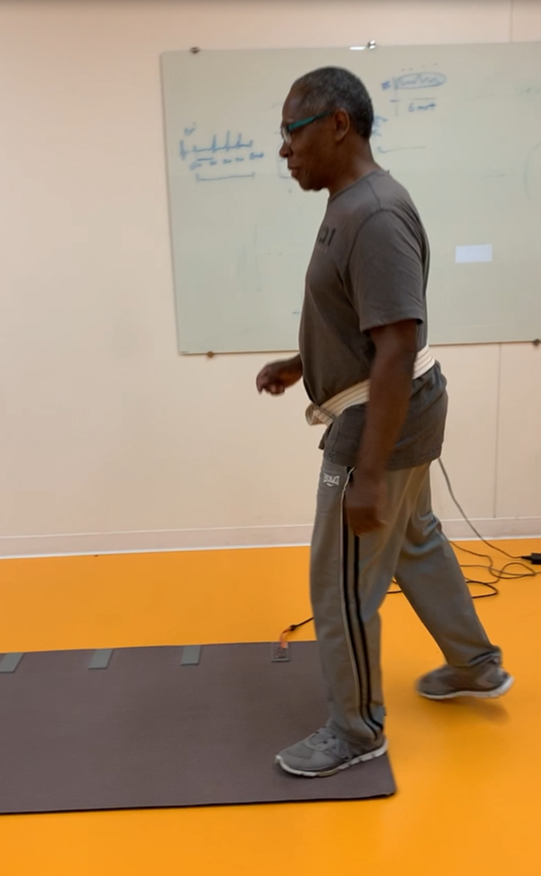
The AARP article explores how stroke rehabilitation has evolved over the past 25 years — driven by a better understanding of how the brain recovers after injury. Additionally, the article features several areas of emerging research and technologies that allow researchers and clinicians to personalize rehabilitation to an individual’s needs, including:
- Therapist-exoskeleton-patient interaction, developed by Shirley Ryan AbilityLab and Northwestern University, in which both the therapist and patient wear “virtually linked” lower-limb exoskeletons. The system allows therapists to guide a patient’s walking with their own leg movements — thereby achieving a greater range of motion and increased step length and height compared to traditional therapy.
- Vagus nerve stimulation, which helps restore function to a paralyzed arm or hand through electrical stimulation.
- Wearable sensors — part of a “stroke recovery toolkit” developed by Dr. Jayaraman — that enable clinicians to quickly assess a patient’s walking ability and predict the trajectory of their stroke recovery.
- Shoes with “variable-friction soles” that allow patients with foot drop to better glide or grip their foot while walking. These shoes, studied at Shirley Ryan AbilityLab and now available commercially, can address balance and stability issues caused by foot drop to reduce the risk of falls.
Tailored, precise care is central to helping patients, according to Dr. Jayaraman. As the AARP article concludes, stroke rehabilitation is “not a single treatment for a single condition but a highly variable problem requiring highly individual solutions.”
Read the full AARP article to learn more about technologies and approaches shaping the future of stroke rehabilitation.
Mentioned Page
Stroke Recovery
ConditionMentioned Profile