Body
At age 15, Kellan T. was your average sophomore. He worked hard to achieve great grades. He enjoyed time with his family and friends. He competed on the varsity tennis and cross-country teams at his high school in Chicago’s far north suburbs.
However, when Kellan went in for a typical teenage rite of passage — a routine wisdom tooth extraction — he experienced a serious hemorrhagic stroke during the procedure.
All of a sudden, Kellan’s life changed direction. After discharge from the hospital, he began an intensive stroke rehabilitation journey at Shirley Ryan AbilityLab, with a determined focus on reclaiming his abilities and returning to school, sports and family.
Rehabilitation Offers First ‘Glimmer of Hope’ After Stroke
Body
Kellan’s stroke was caused by a ruptured arteriovenous malformation (AVM), a serious brain bleed that requires immediate emergency care. At the acute-care hospital, he was placed into an induced coma and underwent a craniectomy in which surgeons removed half of his skull to relieve pressure from the brain hemorrhage.
According to Kellan’s dad, Georgi, a hemorrhage of this size gave Kellan a small chance of surviving the next 30 days, and the likelihood of being able to live independently was slim. Once Kellan came out of the coma, he was in extreme pain and had complete paralysis on his right side. He also had lost the ability to speak and could no longer eat, drink or use the bathroom on his own.
“Days passed with little to no improvement, and he lost 20 pounds,” said Georgi. “The doctors repeatedly asked Kellan to try to move his hand or his leg, but nothing moved. It was heartbreaking.”
Though Kellan had significant impairments as a result of the stroke, Georgi said the first “glimmer of hope” appeared when it was recommended that Kellan go to Shirley Ryan AbilityLab for his recovery.
Intensive Therapy Soon After Stroke Yields Meaningful Improvements
Body
Shirley Ryan AbilityLab’s pioneering approach to stroke rehabilitation focuses on high-intensity therapy, starting as early as possible after a stroke to enable patients to achieve better, faster recoveries.
Only two weeks after the stroke, Kellan transferred to Shirley Ryan AbilityLab for inpatient rehabilitation, where he received physical therapy, occupational therapy and speech-language therapy each day.
“Intensive therapy began to yield small, but meaningful, improvements,” said Georgi.
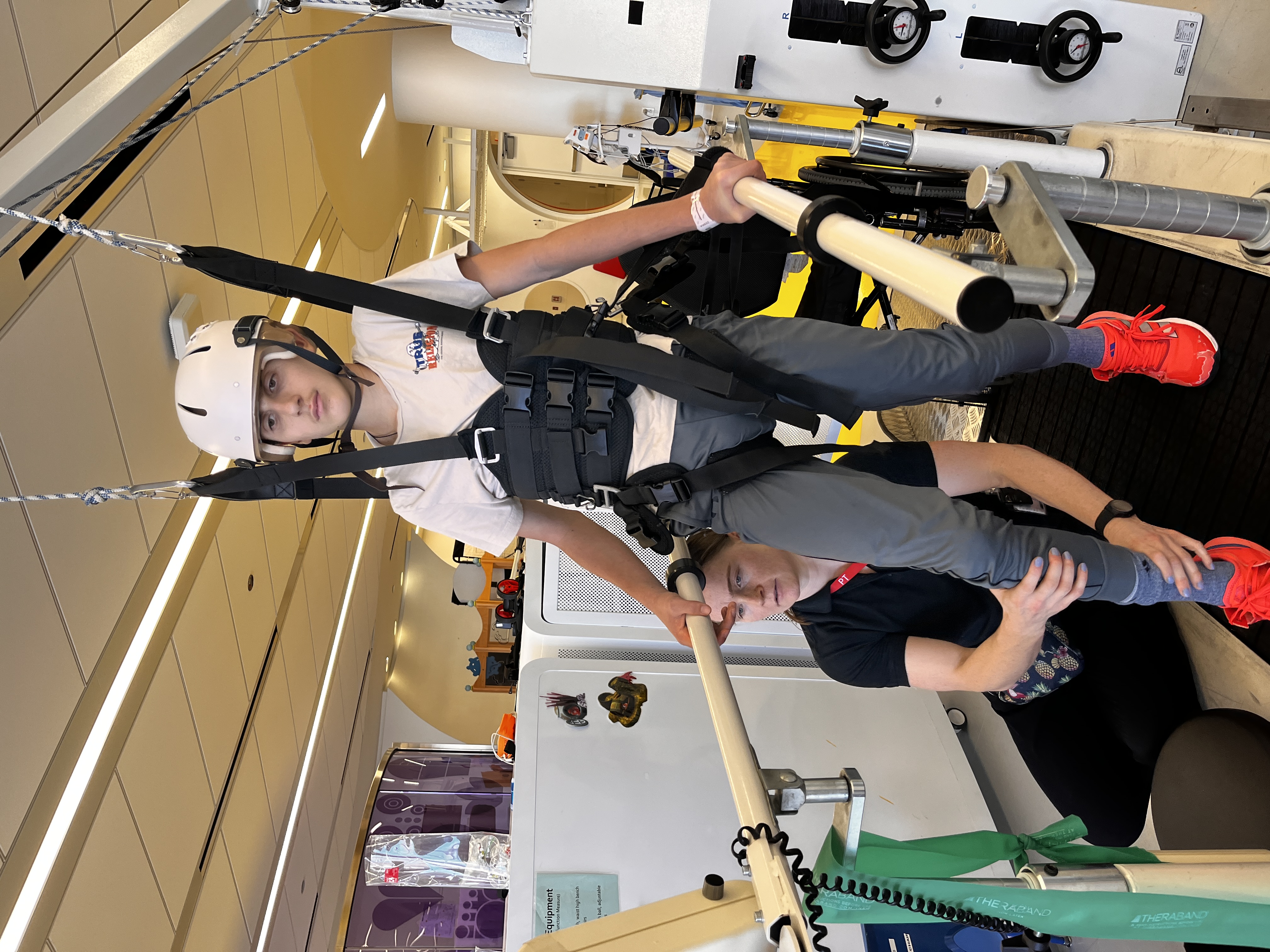
Kellan’s first goal was to transfer from his bed to a wheelchair. He quickly advanced to being on a treadmill to promote mobility in his lower extremities, with his physical therapist initially moving his legs for him while he was suspended in a harness for support.
In addition to physical impairments, Kellan also experienced aphasia, a condition that can occur after a stroke or brain injury that impacts a person’s ability to talk, read, write and communicate. With intensive speech-language therapy, Kellan said his first words after only one week at Shirley Ryan AbilityLab.
“I really wanted to talk, walk and run like I had been able to do before my stroke,” said Kellan. “Therapy helped with all of that.”
Incorporating Kellan’s Love of Tennis in Occupational Therapy
Body
Over the course of three weeks in inpatient rehabilitation, Kellan gained progress with many of his cognitive and functional abilities. However, movement in his right arm, hand and fingers was the last area to come back because of how much the stroke had impacted his right side.
Kellan’s occupational therapist, Haleigh, worked with him to improve range of motion and strength in his upper-body and arm, as well as to build coordination and fine-motor skills in his hands and fingers.
“When Kellan was able to raise his right arm for the first time, that was a huge milestone for him,” said Georgi.
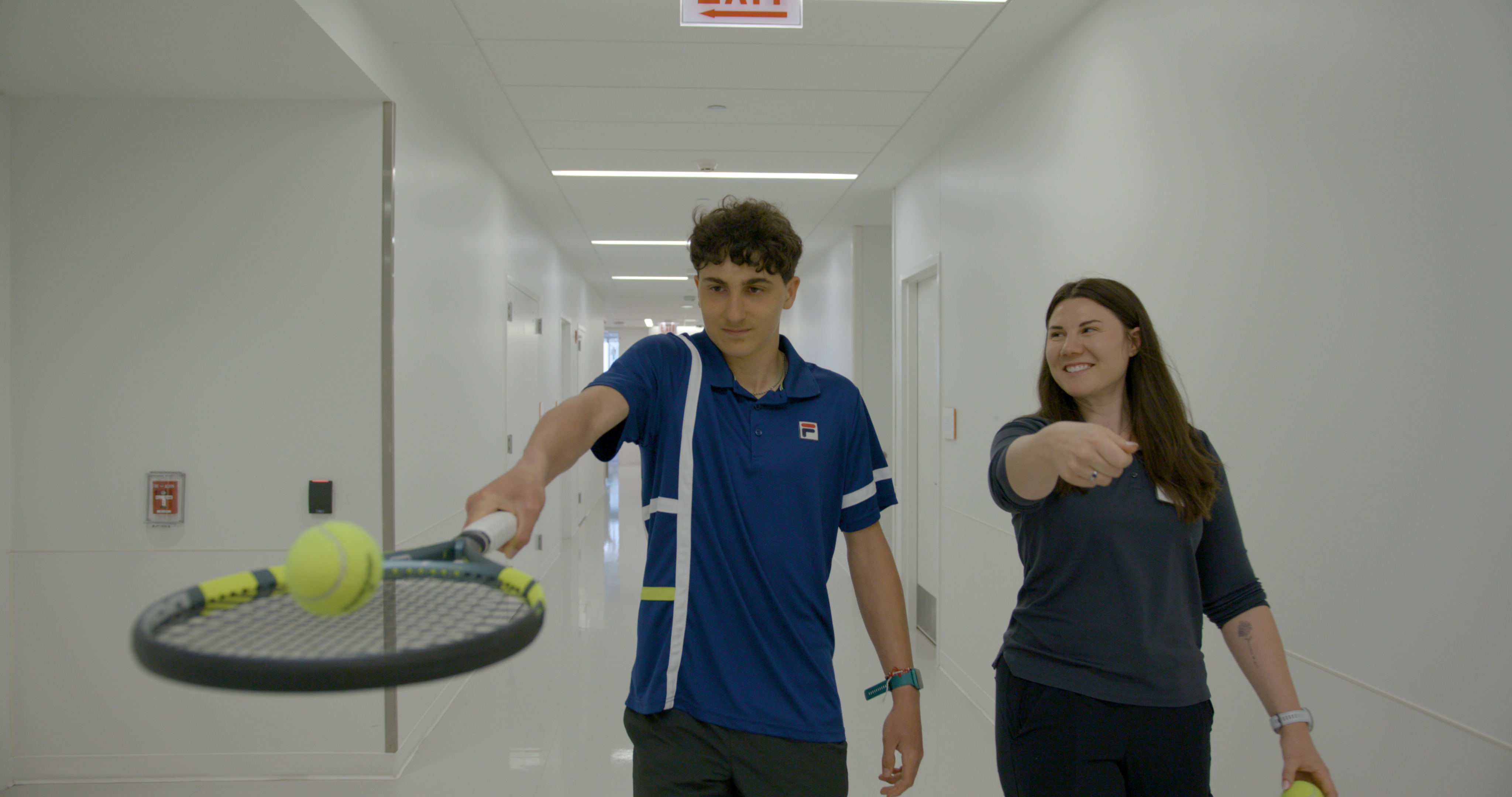
Haleigh leaned into Kellan’s love of sports and competition, incorporating tennis-oriented activities to make therapy more engaging and fun. For example, Kellan practiced throwing a tennis ball up and down and swinging a racquet — visualizing as if he were playing a real game.
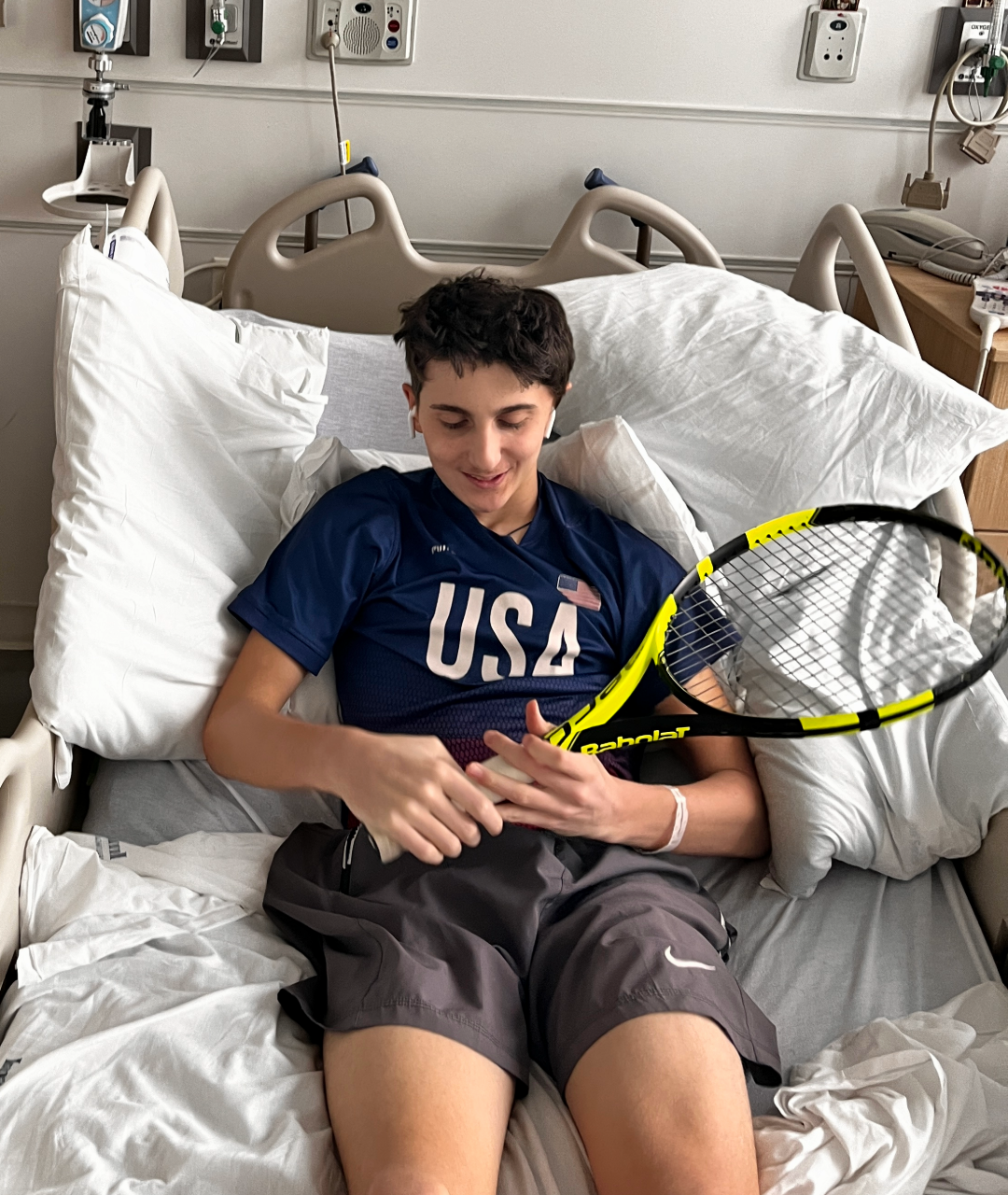
“In one of our favorite photos, Kellan is beaming as he holds a tennis racket for the first time after his stroke — his joy lasted for days. We loved how Haleigh suggested that many of his OT exercises involve tennis balls,” Georgi added.
“Kellan really did have a remarkable recovery,” said Haleigh. “His right arm was pretty flaccid when he first got here, but he was walking around, practicing holding a tennis racket and teaching me how to play ping pong before he left.”
Kellan Transitions to Outpatient Therapy
Body
After making significant progress in his stroke recovery, Kellan returned to the acute-care hospital for brain surgery to remove the AVM that had caused the stroke and to reattach his skull, which had been removed during the craniectomy.
As Kellan continued to make gains in his mobility, speech and, importantly, his independence, he transitioned to outpatient therapy at Shirley Ryan AbilityLab’s Glenview Pediatric & Day Rehab Center, enabling him to continue receiving high-quality therapy closer to home.
He participated in occupational therapy nine hours a week for several months, focusing on improving his fine-motor skills, dexterity and hand-eye coordination with his right side, and relearning how to use both hands and arms together.
Back on the Court & Rising to New Heights
Body
Now, just a little more than a year since his stroke, Kellan is a high school junior, and he is thriving and living at home with his family. He aspires to go to college and study medicine.
“My mom is a physician assistant, so I was already interested in studying medicine,” said Kellan. “Now, after my stroke, it makes me want to help people in my position even more.”
Kellan plays basketball regularly with his twin brother, Ian, to strengthen his legs and arms, and enjoys playing catch with Georgi, using various ball shapes to improve finger dexterity and coordination.
Kellan has returned to what he loves most — playing tennis — and is thrilled to be part of the varsity tennis team. As he still struggles with using his dominant right hand — the side affected by his stroke — he has taught himself to play left-handed while incorporating his right hand into his backhand shots. While early on he practiced with the varsity tennis team and played some exhibition matches, he recently won in a competitive tennis singles match for his high school. Georgi said he was “gleaming with happiness.”
“At first he was clumsy on the tennis court, and I worried he would trip and fall, but now his footwork is amazing and he’s making steady improvements,” said Georgi. “We know it’s important to let him be a kid. By letting him get back to sports, that’s how he will keep getting better while having fun.”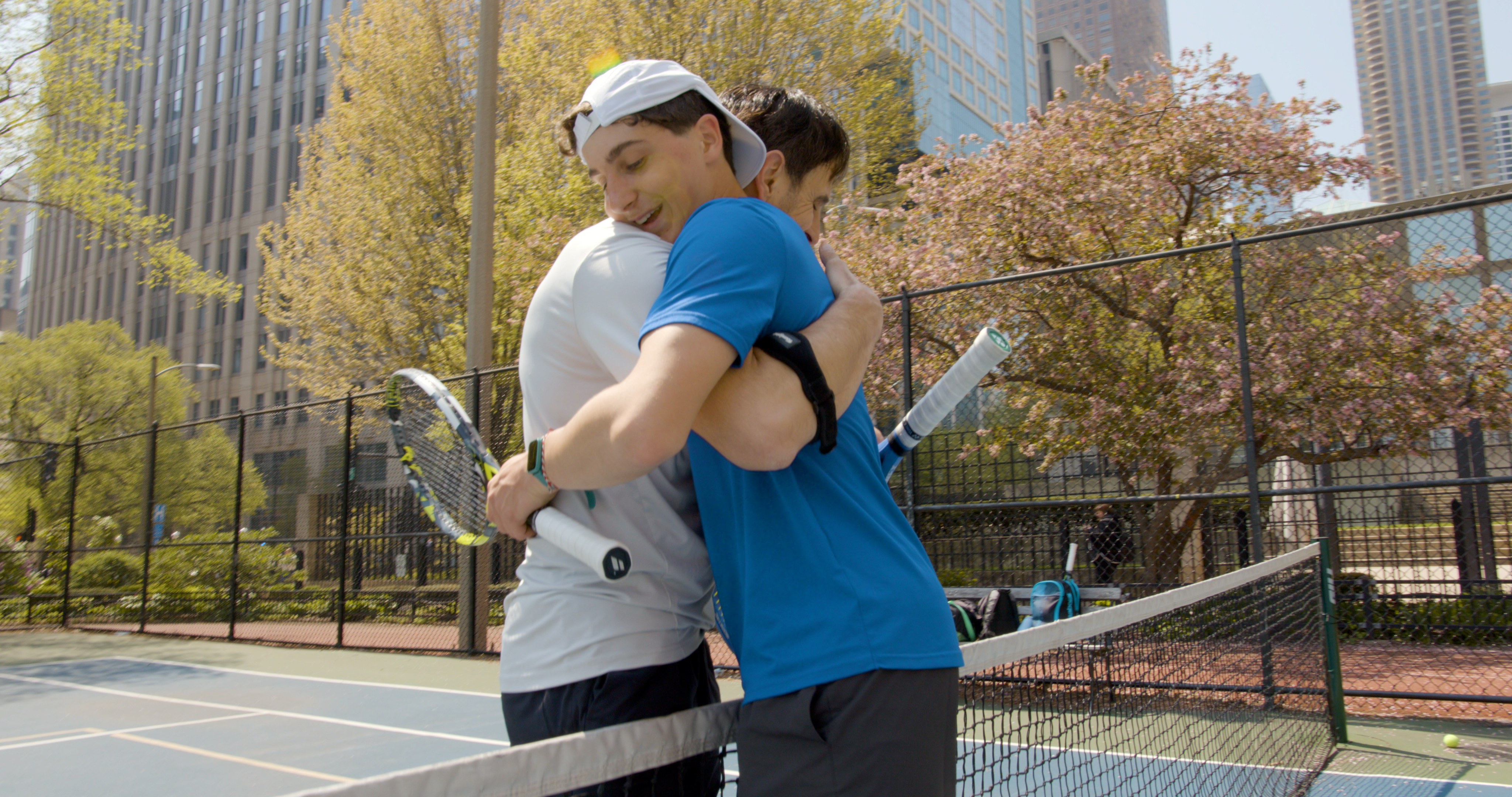
Kellan also works on developing his cognitive and motor skills on his own, practicing 10-finger typing, playing computer games while using his right hand to control the mouse, and journaling on his computer each day — activities that help with finger dexterity.
Notably, 11 months following the stroke, Kellan and his family participated in SkyRise Chicago, Shirley Ryan AbilityLab’s annual stair climb at the Willis Tower that raises funds to support the hospital’s mission.
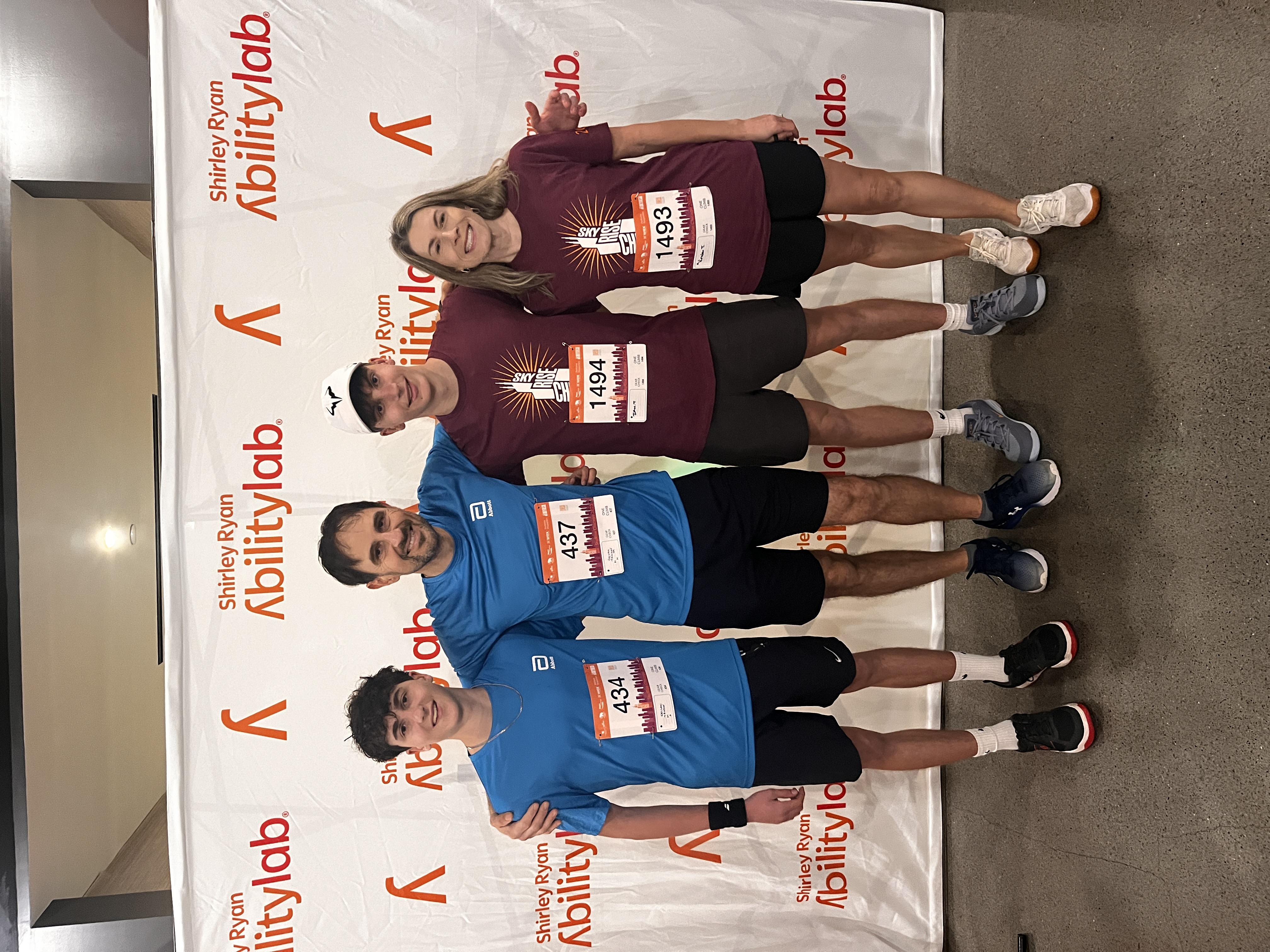
Kellan trained on a stair climber to prepare. He successfully climbed 105 flights and all 2,149 stairs to the top of Willis Tower, finishing SkyRise in just 20 minutes, 23 seconds. He came in first place in his age group and 22nd overall from more than 2,141 participants — a remarkable achievement.
“Kellan was thrilled and looks forward to next year, where he aims to break the 20-minute mark,” said Georgi.
Through it all, Georgi says Kellan’s determination has continued to drive his physical and mental recovery.
“My wife and I are endlessly proud of Kellan’s attitude and determination,” said Georgi. “We are profoundly grateful to Shirley Ryan AbilityLab — not only for the exceptional therapists but also for the compassionate nurses, patient care technicians, physicians, nutritionists, food service staff and everyone who created an environment where healing could happen. The loving and dedicated team at Shirley Ryan AbilityLab is the key ingredient in making miracles possible.”