Body
The call came around 1 pm. The woman on the phone told Chrissy that her 10-year-old son, Charlie S., had been in an accident.
“How bad?” Chrissy asked.
“Just come to the hospital,” the woman replied.
“But how is he? Please, tell me something,” Chrissy pleaded.
“Charlie has a pulse,” the woman said.
Chrissy and her husband, Ryan, raced through a January blizzard to a Springfield, Ill., hospital where Charlie lay unconscious in a coma. He had been in a sledding accident and sustained a traumatic brain injury (TBI) and a fractured skull. His prognosis was uncertain.
The first couple of weeks were touch and go as Charlie remained unconscious and unresponsive. He underwent a craniotomy, a procedure in which surgeons temporarily remove part of the skull, to relieve swelling in his brain. He needed a tracheostomy (trach) tube to help him breathe, as well as a feeding tube to nourish him.
Each day brought new questions, but few answers. Chrissy and Ryan wondered whether Charlie would ever wake up. Would he move, eat or speak again?
Yet, after 30 days in the pediatric intensive care unit, Charlie was stable enough to leave acute care and start the next phase of his journey in inpatient rehabilitation. The emergency room nurse who took care of Charlie urged Chrissy and Ryan to bring him to Shirley Ryan AbilityLab in Chicago. Despite being hours from their home, family and support system in central Illinois, they took her advice.
The First Stages of Recovery
Body
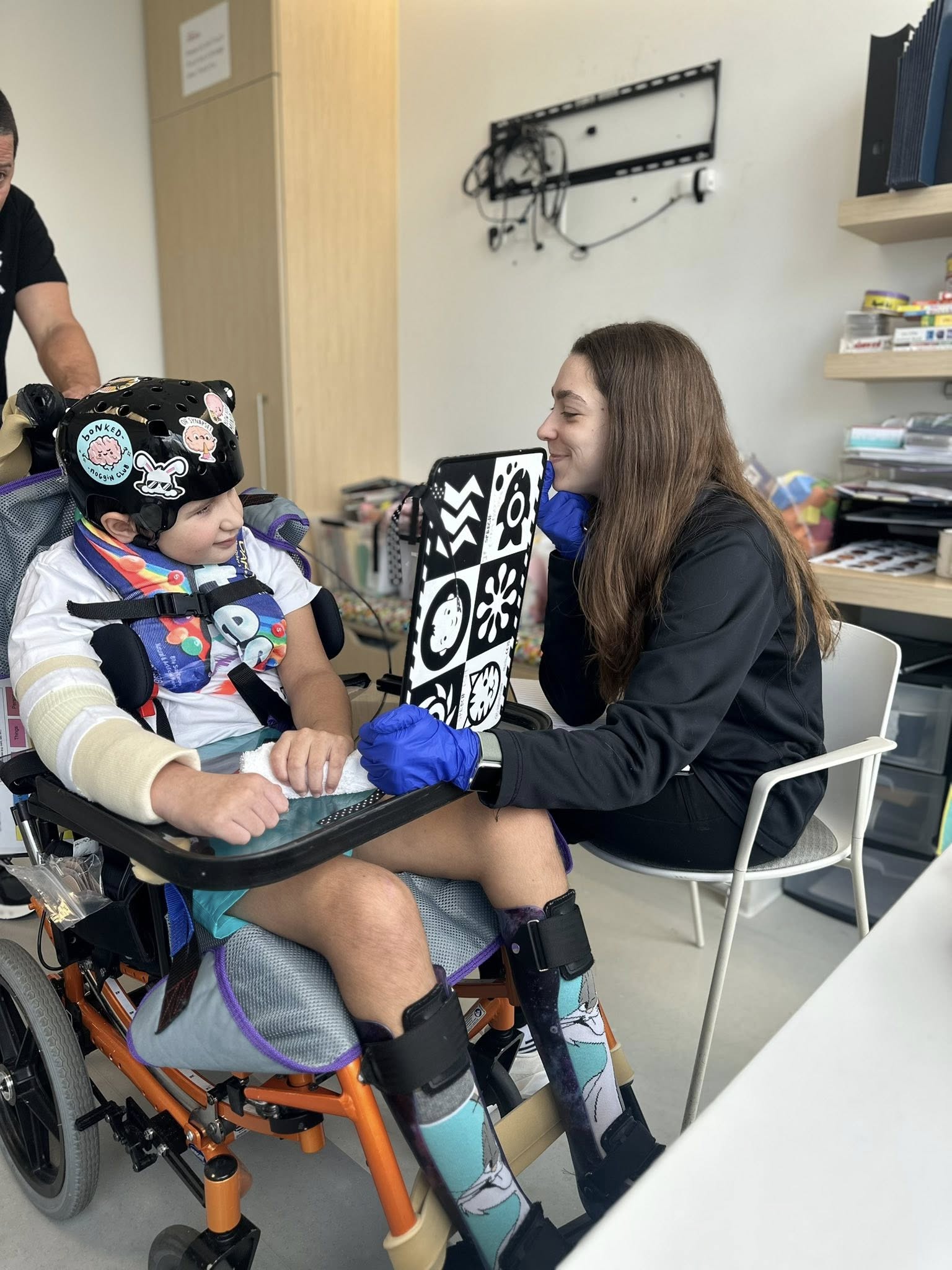
Charlie was minimally conscious when he arrived at Shirley Ryan AbilityLab. He still had the trach and feeding tubes, and he wore a helmet to protect the part of his skull that had been removed. He couldn’t follow commands, track movement with his eyes or respond meaningfully to touch.
His team performed a specialized assessment to evaluate his level of awareness — Charlie scored just 11 out of 50. That score told them that Charlie’s brain needed time to heal before he could attempt complex movements in therapy. In the meantime, his team focused on foundational tasks, such as sitting, head control and positioning his body in postures that promoted optimal joint and muscle alignment.
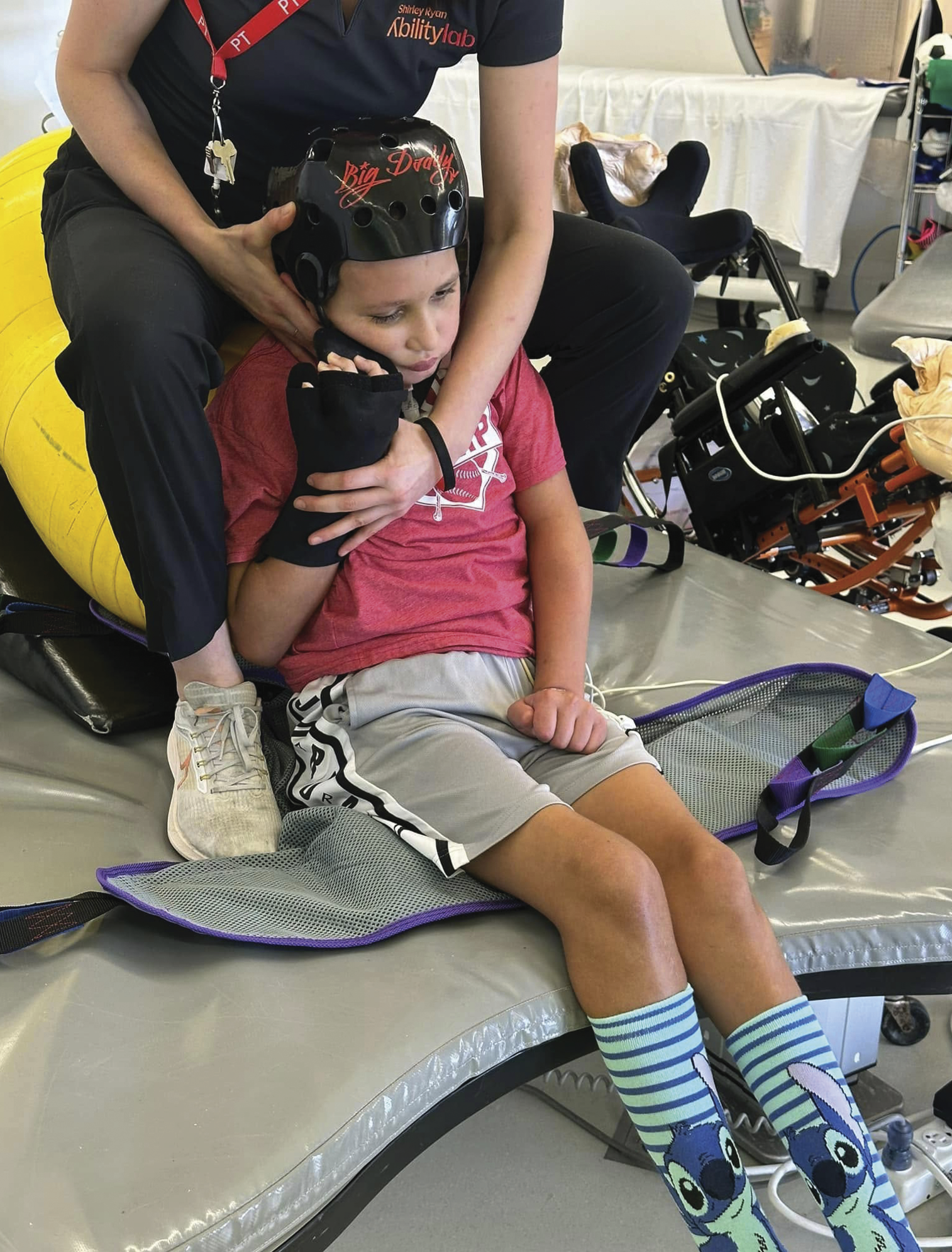
Charlie’s TBI left his body painfully contracted, especially on his right side. To ease this tension, his therapists used braces, collars and other supports to position his body in a more natural, comfortable alignment.
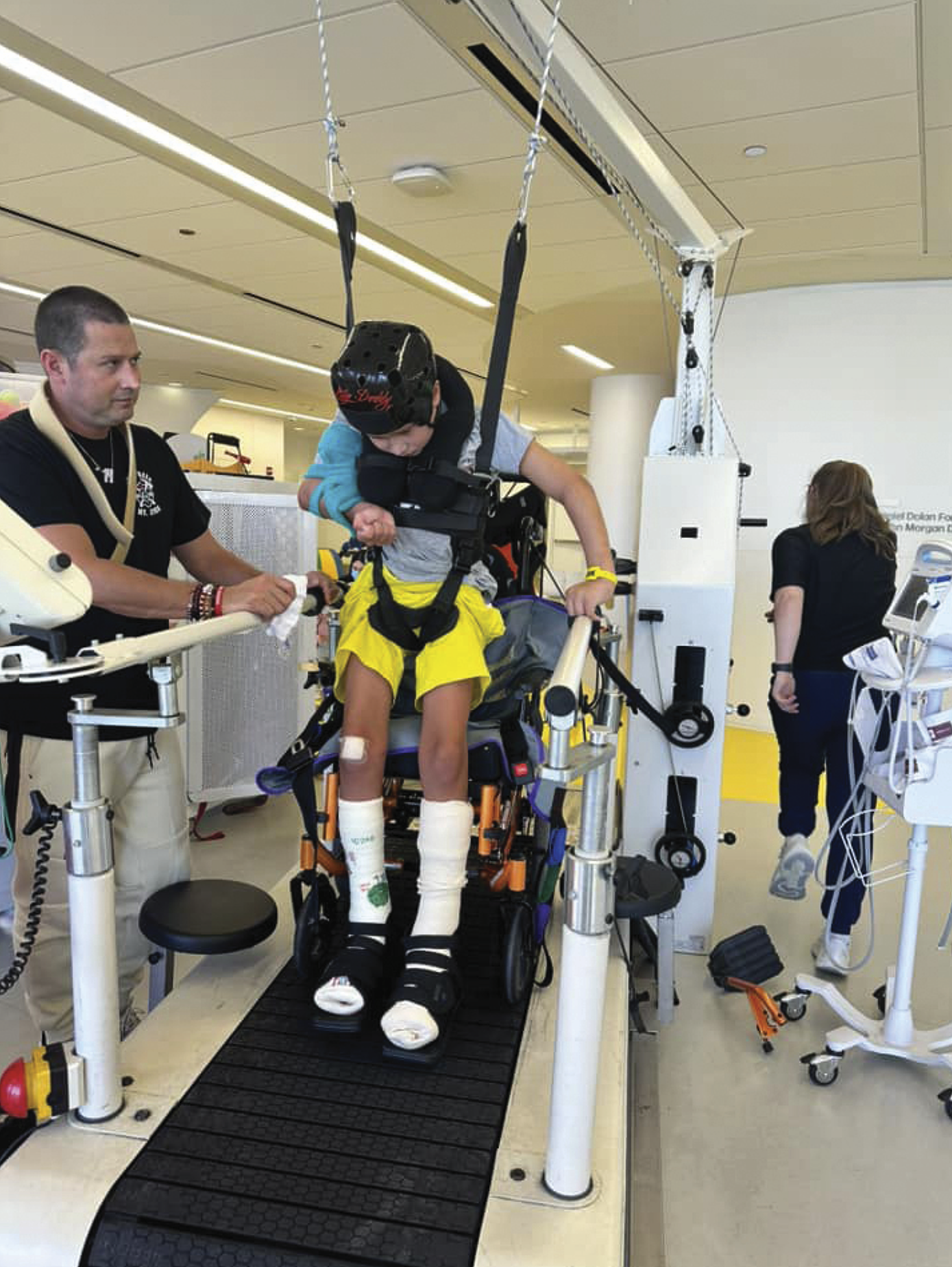
To gently stretch and realign his limbs, his team placed his arm and ankles in casts for several days at a time to gradually increase range of motion. Then, they transitioned him into braces to maintain that range of motion and support him during therapy.
To get Charlie up on his feet, they suspended him in a body harness over a treadmill, with therapists on either side guiding his legs as the machine moved. Six weeks after he arrived, Charlie’s physical therapist noticed a slight, but promising, change. Charlie began initiating movement in his left leg on his own as she guided him on the treadmill. It was the first clear sign that he was beginning to awaken.
Building Strength & Stamina With a Playful Spirit
Body
As Charlie grew stronger and more mobile, his clinical team incorporated activities he loved into therapy, such as baseball, basketball and soccer. They took him and his parents to restaurants, museums and even the beach — showing them that Charlie could still experience joy, adventure and a high quality of life as he recovered.
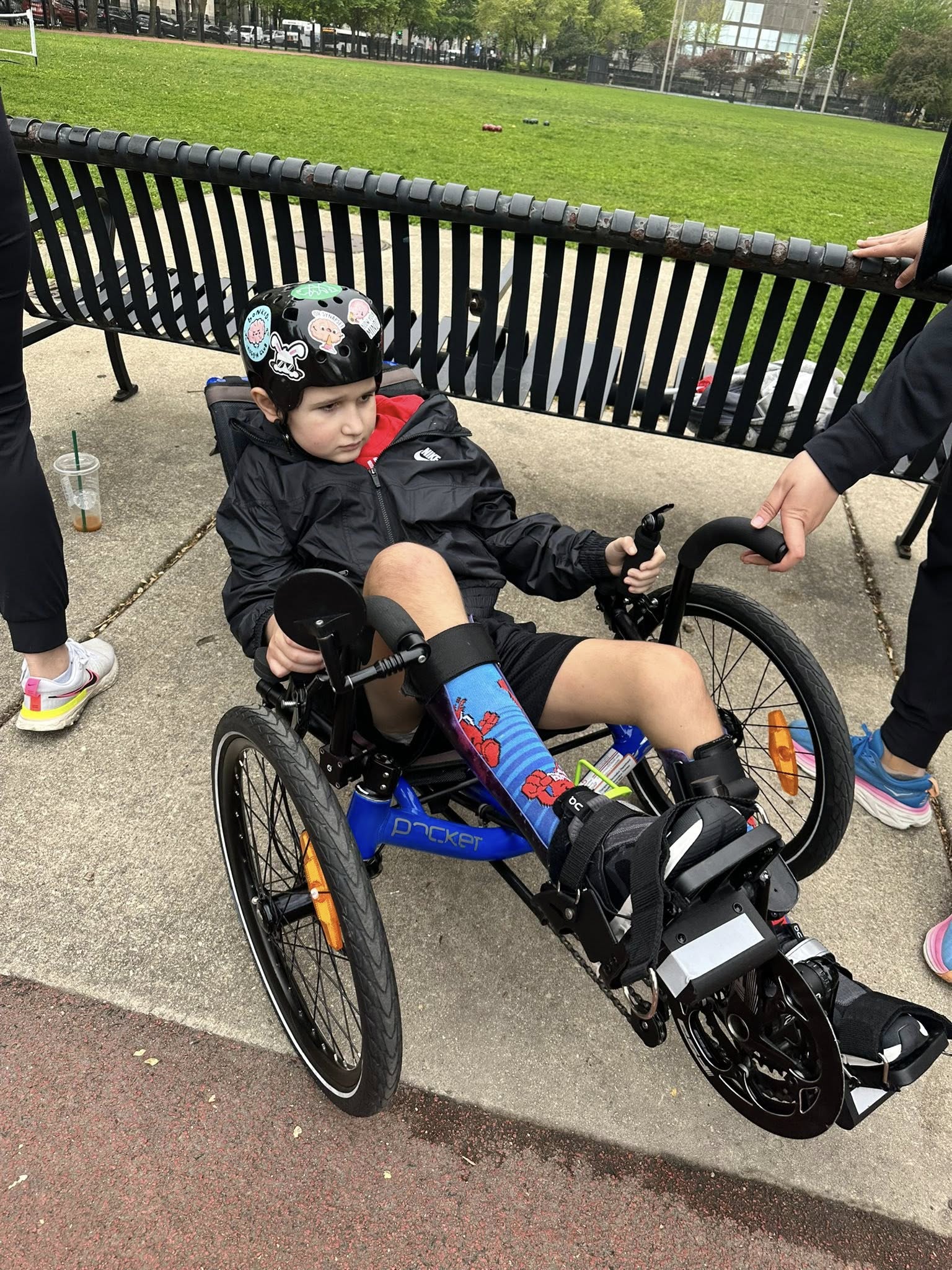
These “community integration” outings had a therapeutic purpose as well, giving Charlie the opportunity to practice some of the skills he would need in the real world, like climbing stairs, using a public restroom and socializing in the community.
Charlie’s team made therapy so much fun that it never felt like hard work to him. His strength and stamina were increasing every day. He was walking and climbing stairs with assistance, grasping objects with his hands, and mastering sit-to-stand transitions and wheelchair transfers — each milestone a testament to his determination and the personalized, creative care his team provided.
Gradually, Charlie’s personality also began to re-emerge. He was smiling, laughing and giving everyone on the floor fist bumps and high fives.
His care team credits Chrissy and Ryan with playing a vital role in his progress. They showed up every day, stayed positive and met Charlie exactly where he was. Ryan made it his mission to keep Charlie laughing — often with silly jokes that never failed to get a smile.
Eventually, Charlie could feed himself, dress himself and use the bathroom with minimal support.
One of his biggest breakthroughs came five-and-a-half months into his inpatient stay. He had just completed speech therapy for the day. As his therapist left the room, Charlie spoke his first word: “Bye.” For Chrissy and Ryan, hearing their son’s voice — a sound they had longed for during months of silence — was a moment of pure pride and joy, and a sign that the Charlie they knew was still there, finding his way back.
Progress Through Personalized Rehabilitation
Body
Every TBI is different — and so is every recovery. Families are called upon to stay hopeful, stay present and stay strong, even when the path ahead is unclear.
Chrissy and Ryan did their best to do just that. It wasn’t easy, but they found comfort in each other and in Charlie’s care team members, who helped them live in the moment and focus on the daily work of rehabilitation. They met regularly with Shirley Ryan AbilityLab psychologists, who helped them navigate how and when to talk to Charlie about his accident. The hospital’s child life specialist was another constant source of support — providing comfort to Charlie before procedures and being a friend when he just needed someone to goof around with.
Chrissy and Ryan are deeply grateful for the care Charlie has received at Shirley Ryan AbilityLab.
“If we hadn’t come here, I cringe at the thought of what might have happened,” said Ryan. They praise the positive environment, the expertise of the staff and the personalized approach to Charlie’s care — and especially the therapists who have shown such dedication and formed a loving connection with their son.
“I feel so lucky that the universe put Charlie and me together in occupational therapy,” said Brittany, Charlie’s occupational therapist. “To see him when he first got here, scoring so low on the awareness scale, and then, months later, hear him say my name — that’s one of the coolest things I’ll ever get to experience in my career.”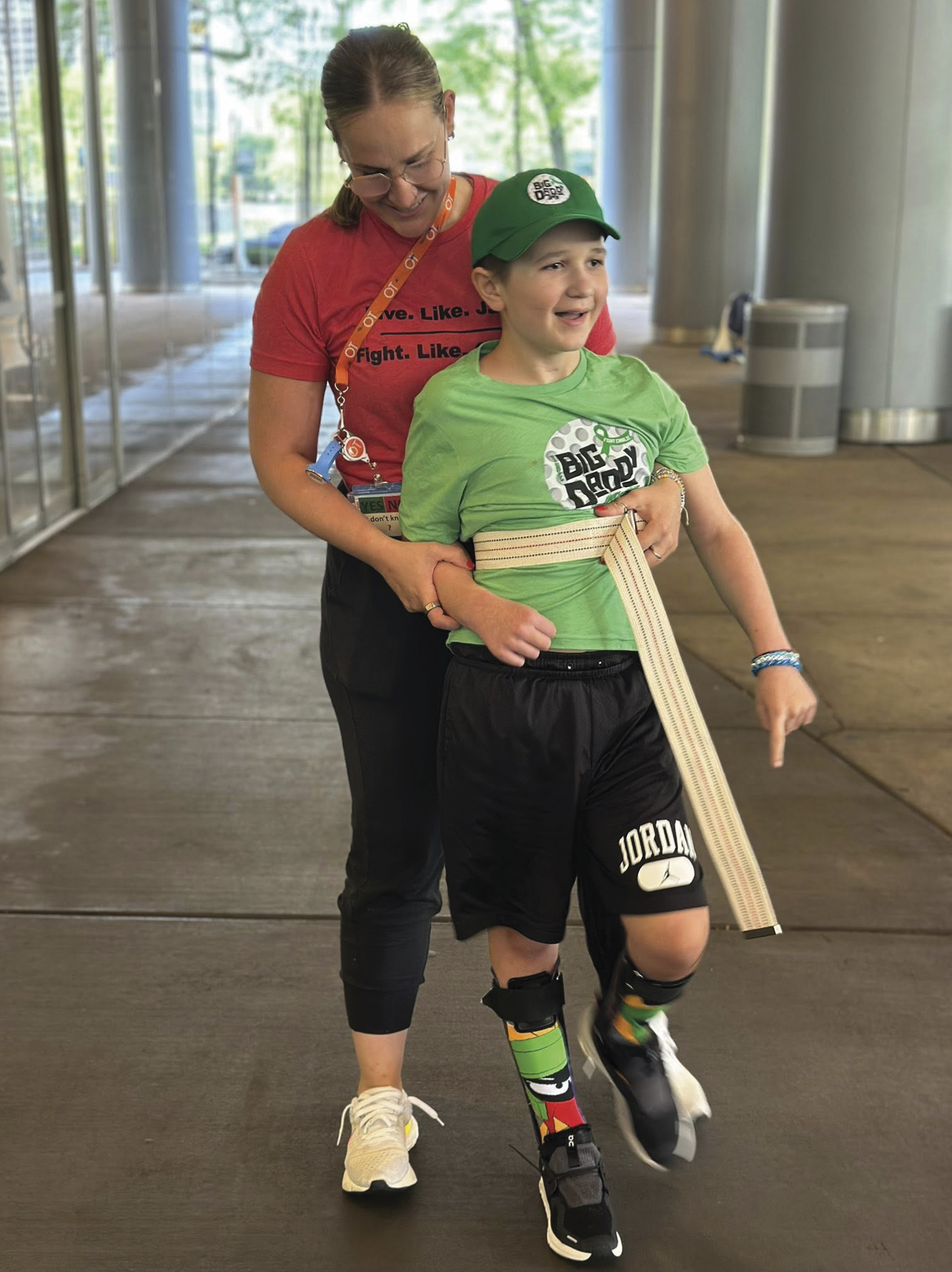
After six months of hard work, Charlie graduated from inpatient care and continued his journey in DayRehab for another five months, where he focused on building strength, balance and endurance, as well as walking short distances and standing for brief periods of time unassisted.
Charlie continued to make great gains, working on activities of daily living such as getting dressed unassisted as well as on working toward larger mobility goals. For example, one day in therapy, he pushed Chrissy in a wheelchair — a role reversal that gave Charlie the opportunity to practice walking and engage his upper body.
A New Journey Begins: Going Home
Body
As the time for Charlie’s discharge drew closer, his family created a countdown chain made of construction paper — pulling off one link at a time in anticipation of his final day at Shirley Ryan AbilityLab.
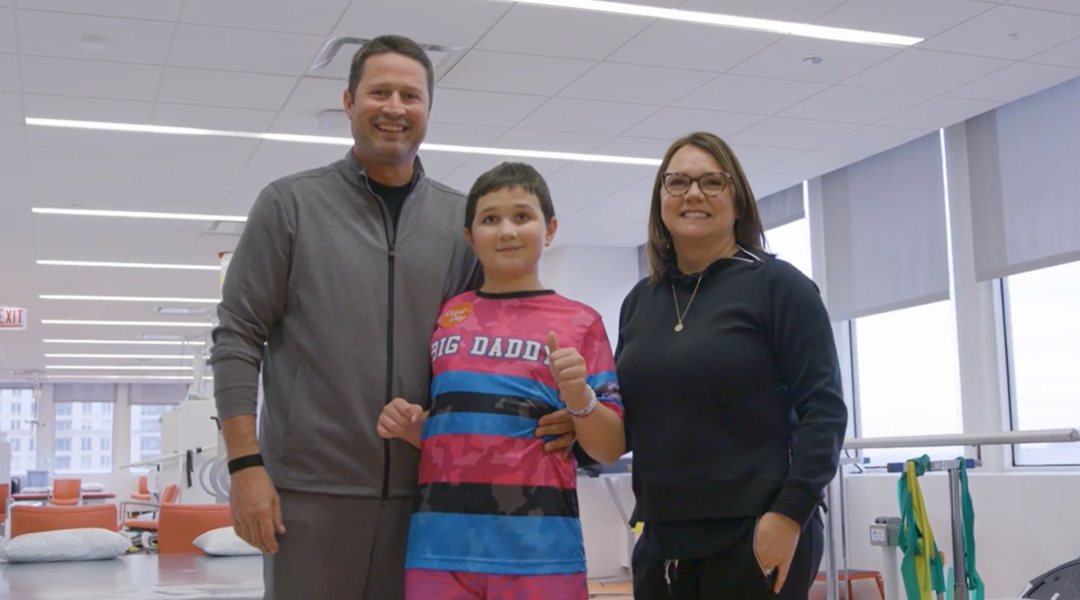
At long last, Charlie met a “big, beautiful milestone” according to his parents: 347 days after his accident, he finally rang the bell to graduate from DayRehab. This marked the end of Charlie’s chapter in Chicago and at Shirley Ryan AbilityLab, and he was able to return home with his family just in time for the holidays.
Since going home, Charlie has celebrated his first day back at school. He and his family also took a fishing trip to Florida, and said it was a perfect mix of rest, relaxation and quality family time after all the family had been through the previous year.
“Now it’s back to our schedule and finding our new normal, with full hearts and great memories,” said Chrissy and Ryan. “So much courage, resilience and heart in one kid. We are beyond proud of Charlie.”