Body
Lisa T. has always been a talker — bold, opinionated and fiercely driven. She loves politics and engaging in debate. After losing her brother and a cousin to gun violence, she enrolled in law school with a dream of helping her community.
“I wanted to help people who couldn’t help themselves — people who didn’t know their rights, who needed someone to fight for them,” Lisa said.
For nearly two decades, Lisa worked at a university and then started to plan for her retirement to focus on full-time advocacy. However, before she could make that transition, everything changed one morning.
“I remember waking up and not being able to talk. I knew what I wanted to say, but the words just wouldn’t come out,” she recalled. “It was very traumatic for me.”
After eight hours in the emergency room and a battery of tests, Lisa learned she had experienced a stroke in the left hemisphere of her brain.
While the stroke caused weakness and pain in her right arm and difficulty walking, the loss of her ability to communicate hit the hardest. The stroke affected her speech, memory and cognitive processing — classic signs of aphasia, a condition she’d never even heard of until doctors explained to her that it can occur suddenly after a stroke and impact the ability to speak, understand language and express thoughts, ideas and feelings.
Lisa spent four days in acute care before going home to live with her daughter. For an accomplished, independent woman like Lisa, needing help with basic tasks like taking medication, preparing meals and walking made her feel like a child again.
“I was depressed, angry, defiant and frustrated,” Lisa admitted.
Starting Over
Body
Soon after, Lisa began the lengthy process of recovery in outpatient therapy at Shirley Ryan AbilityLab, with a particular focus on speech-language therapy to help her rebuild her communication skills. She compares those early days to being back in kindergarten. Lisa worked on learning sounds, pronouncing words, writing the alphabet and spelling.
For the next five years, Lisa has attended therapy three days a week to re-learn how to read and speak. She began reading one sentence at a time, working up to a paragraph and then to a page. Each small victory paved the way for the next challenge.
It wasn’t enough to just read something; Lisa needed to understand what she read and be able to explain it to others. Knowing how much Lisa loved politics, her speech therapist gave her complex, in-depth news stories to read and discuss. Doing so reminded her of how far she had come.
Learning to Be Comfortable With Being Uncomfortable
Body
Adjusting to life outside the hospital can be one of the hardest parts of recovering from aphasia. Simple tasks — like ordering at a restaurant — can be stressful and frustrating because people don’t know what aphasia is or how to respond. Lisa practiced scripts with her speech therapist on how to order food or make doctor’s appointments.
Learning to advocate for herself became another milestone in her journey, as she navigated a world that often lacked patience, understanding and awareness. It helped prepare her for a challenge she never anticipated: losing her job.
A little more than two years after the stroke, Lisa was terminated from her job while still out on disability leave. Losing her job also meant that she would lose all of her benefits, too.
However, after everything she had been through, Lisa wasn’t going to accept this as the end of the story.
With the support of her family and her Shirley Ryan AbilityLab psychologist, therapists and doctors, Lisa put her case together to appeal her termination.
“I used what I learned in law school and at Shirley Ryan AbilityLab to fight for myself,” she said. “I spent six months working on my case and submitted 342 pages of evidence. And I won. My termination was overturned.”
Leaning Into Advocacy
Body
Today, Lisa is using her voice to help others, just as she always intended. She serves as a Shirley Ryan AbilityLab peer mentor, guiding others who are recovering from stroke and navigating life with aphasia as well as advising those who have had similar challenges with their employers.
Though she has completed outpatient therapy, she continues to participate in Shirley Ryan AbilityLab’s aphasia community groups, offered through the Center for Aphasia Research & Treatment. The groups give participants the opportunity to practice communication, meet others living with aphasia, learn and have fun in a supportive environment.
The donor-funded programming includes conversation groups, a book club, a film discussion group, an aphasia choir and supported volunteer opportunities. For Lisa, these groups provide a safe space where she can be with her peers, free from judgment.
These days, Lisa lives independently and enjoys yoga, crafting, going to the movies, spending time with family and dancing. In fact, at her daughter’s wedding, she took to the dance floor for a special mother-daughter dance.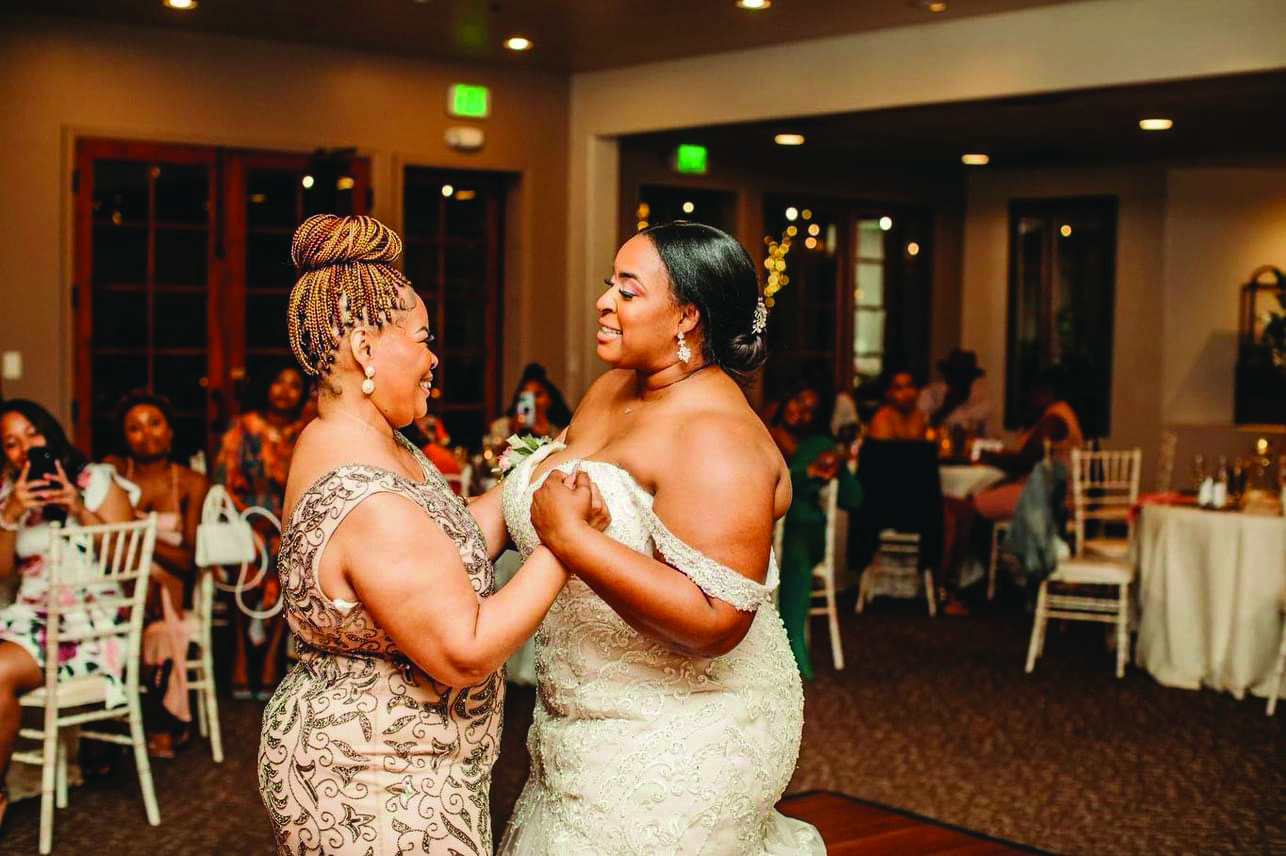
Lisa’s experience has shown her the depth of her strength and resilience and reignited her love of advocacy. While it’s still hard to speak spontaneously and express her ideas in writing, Lisa counters occasional frustration with gratitude and a commitment to positivity.
“I say to myself, you should be grateful that you woke up this morning because your next breath is not promised to you,” she said. “Having the opportunity to go to Shirley Ryan AbilityLab was the biggest blessing. It’s like a family. Everybody there is so helpful, knowledgeable and caring. They really worked with me and took me to heart. They treated me like I mattered. I cannot thank them enough.”