Body
According to the National Multiple Sclerosis (MS) Society, nearly 1 million people in the United States live with MS. MS is a chronic autoimmune disease of the central nervous system that disrupts nerve signaling between the brain and body, causing wide-ranging symptoms, including fatigue; vision impairments; numbness and tingling; and mobility challenges.
Body
While the progression of MS can be unpredictable over a patient’s lifetime, early treatment and rehabilitation can improve patient outcomes. In fact, patients come to Shirley Ryan AbilityLab for inpatient rehabilitation, DayRehab and outpatient care — participating in medical treatments as well as therapies for building strength, motor function and communication skills. Patients with MS also receive guidance and resources for other needs, such as diet advice, access to support groups and assistive devices.
At the same time, ongoing research at Shirley Ryan AbilityLab aims to help patients improve their long-term outcomes and independence.
MS Research at Shirley Ryan AbilityLab
Body
Research scientist Milap Sandhu, PT, PhD, is leading innovative research to advance and expand the rehabilitation interventions available to people with MS. His work focuses on translational approaches that harness neuroplasticity to promote functional independence, with the goal of improving long-term outcomes for people living with MS.
Acute Intermittent Hypoxia
Body
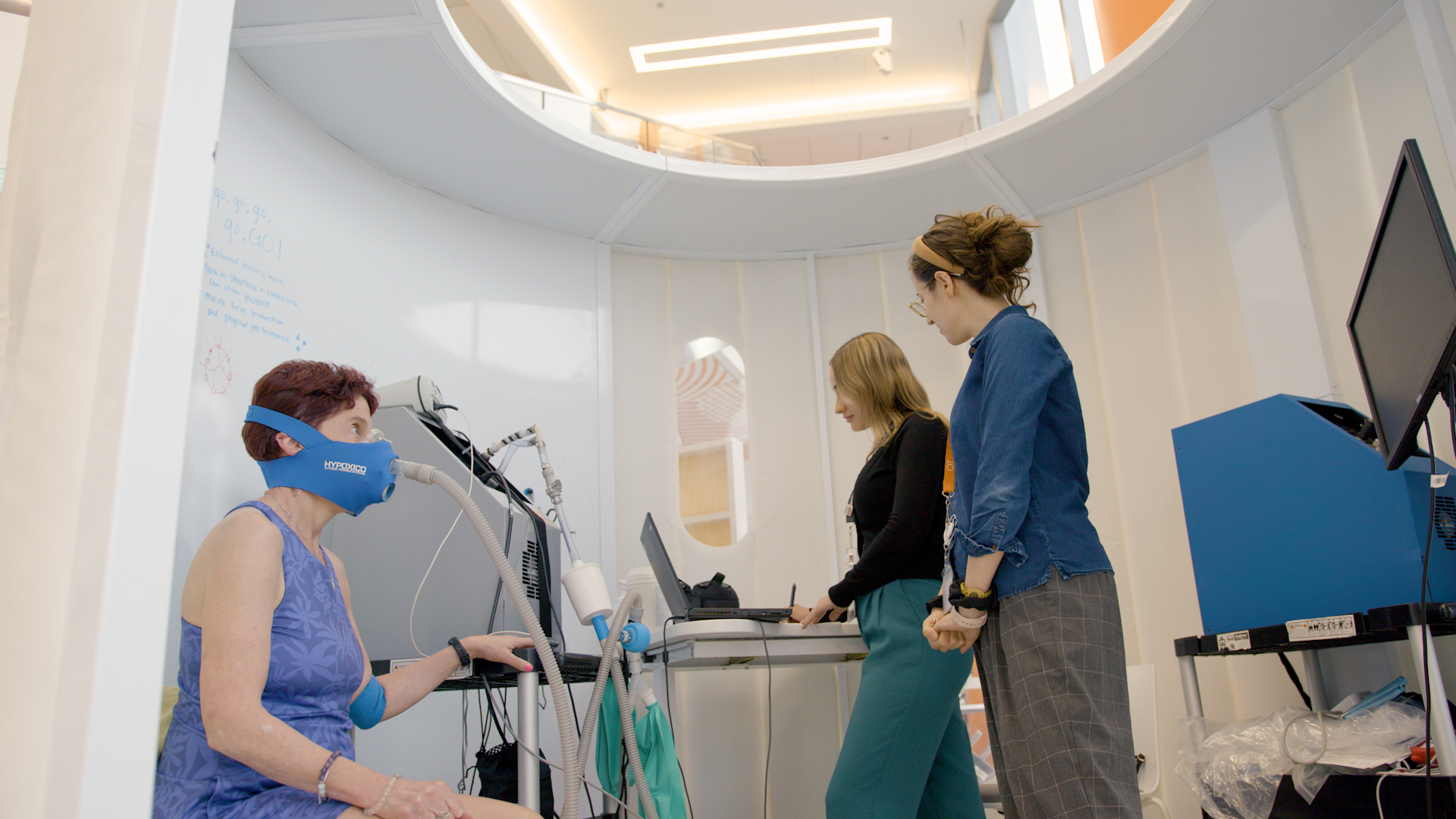
One of the interventions that Dr. Sandhu and his team studies is acute intermittent hypoxia, a therapeutic, non-invasive treatment in which patients wear a breathing device that delivers brief episodes of reduced oxygen alternating with normal air. This then triggers the release of growth factors that strengthen neural connections and promote neuroplasticity.
While acute intermittent hypoxia has been shown to be helpful in improving muscle strength, control and motor function, it has not been studied specifically among people with MS until now.
“The idea is that if we combine this intervention — acute intermittent hypoxia — with traditional rehabilitation like walking training, the combination would produce better outcomes than the single interventions alone,” said Dr. Sandhu.
Gait Deviation Index
Body
Dr. Sandhu's team is also developing new outcome measures to better capture the sensorimotor deficits experienced by people with MS, including measures of gait, proprioception and motor control. One example is the use of markerless motion capture, a camera-based technology that records 3D movement data, to analyze walking patterns in people with MS.
From these data, a “gait deviation index” can be calculated that quantifies how a patient's walking pattern compares to a typical gait. In the future, this measure could be used in the clinic to monitor changes over time and evaluate the effects of rehabilitation interventions.
“MS is one of those conditions where no two patients look alike,” said Dr. Sandhu. “We really need interventions that could be tailored to each individual.”
Improving Patient Outcomes, Benefiting the MS Community at Large
Body
Dr. Sandhu notes that, while rehabilitation interventions in MS are understudied compared to other neurological conditions, the field is growing. He hopes his work will lead to targeted, evidence-based rehabilitation strategies that improve independence and quality of life for people living with MS.
“I’ve had the best experience working with people with MS,” said Dr. Sandhu. “There is a general sense of wanting to improve outcomes — not just for themselves, but for the entire MS community.”