Body
Samra H., 11, has always been an avid reader. Her bedroom is full of piles and piles of books, including her favorite genres: graphic novels and real-life survival stories. She is dedicated to her schoolwork and has always read at a level two to three grades ahead. One of Samra’s favorite activities is to visit her local public library near her home in the Chicago suburbs, checking out stacks of books to devour over the weekend.
However, when Samra was 9 years old, she started experiencing functional vision loss. For two years, her vision came and went in ways she could not control. In addition to the physical and emotional toll of sudden vision loss, the hardest part for Samra was losing her ability to read clearly. Words would “blur or double up” if she was reading a book, working on a class assignment or taking a test.
Samra saw a series of specialists, including eye doctors and neurologists, but they were perplexed by her condition. Many diagnostic tests showed that her eyes were healthy.
At long last, Samra was diagnosed with functional neurological disorder (FND), a condition in which the brain struggles to send and receive signals properly. FND affects movement and the senses, making it difficult for some patients to move, swallow, hear or — in Samra’s case — to see. Symptoms are often inconsistent and may come and go, but early diagnosis and education are an important part of treatment to help patients regain function.
Fortunately, Samra and her family discovered outpatient occupational therapy (OT) at Shirley Ryan AbilityLab. Over eight weeks, she participated in intensive therapy while making a deep connection with her therapist, Haleigh. During that time, Samra gained strategies that helped to improve her vision and enabled her return to reading — and to the library!
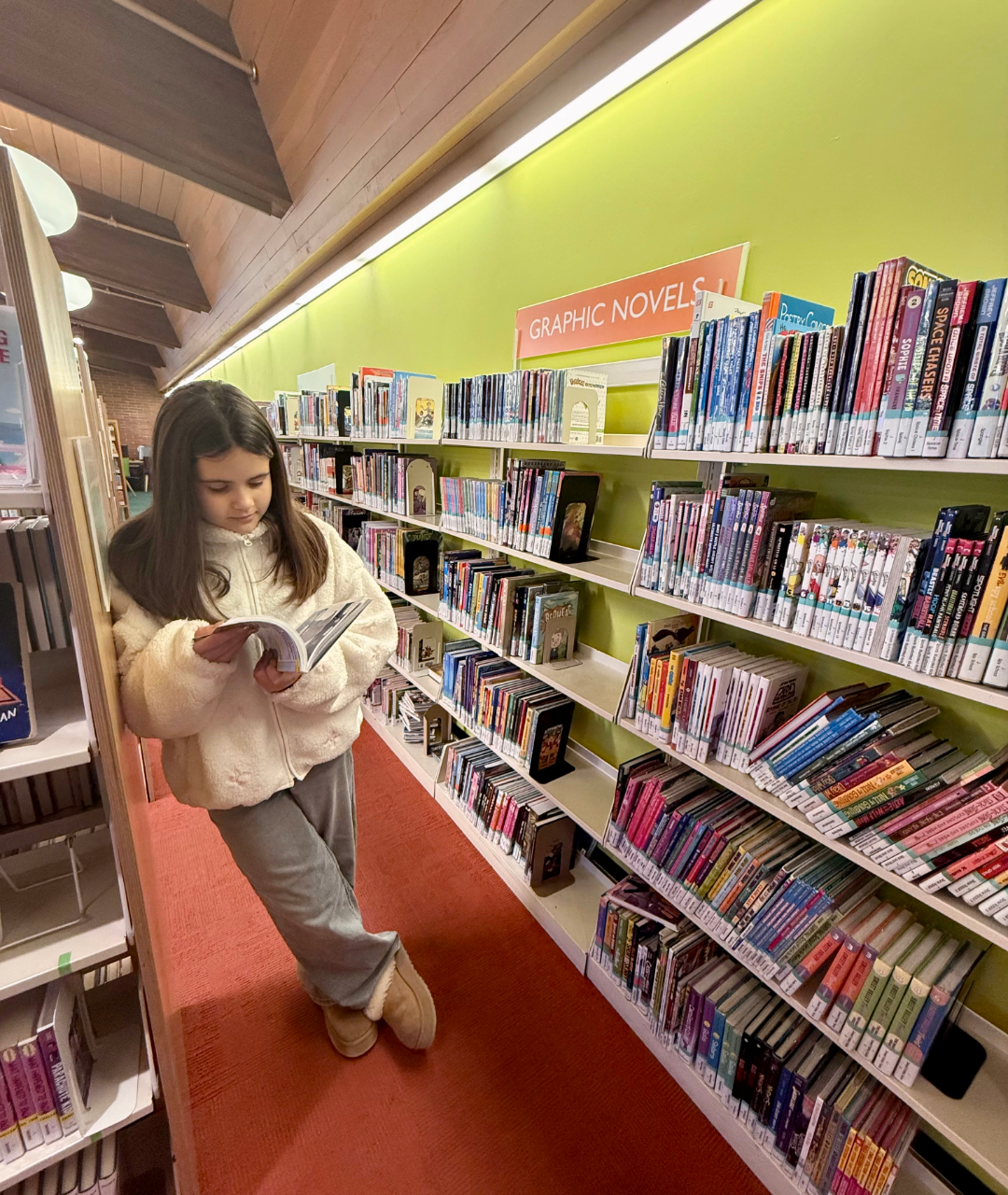
In the following Q&A, Samra shares more about her journey with FND and functional vision loss.
How did you feel when you started to experience vision loss?
Body
Because my vision loss came and went, a few doctors did not believe me. At the beginning, even my family did not fully understand. That did not feel good. It felt like people did not understand what I was going through.
School was especially difficult. I went from being an A-plus student who was involved in everything to someone who could not see, and glasses did not help me. On top of that, I had painful headaches that medication did not help. I constantly worried my vision would go blurry during tests or important assignments. Sometimes tests took me longer, and I had to take them in two or three parts. I would be alone while my classmates did other things, which made me feel lonely.
After a while, people’s faces started to go blurry, and my own face in the mirror was blurry, too. Try sneaking in some mascara without seeing clearly. Not a good idea.
Describe what it was like when you first started coming to Shirley Ryan AbilityLab for occupational therapy.
Body
Everything truly changed when I started going to Shirley Ryan AbilityLab for OT. From the very first day, Haleigh stood out. She was kind, and she told me she could help. After seeing many doctors without clear answers, that mattered. She believed my vision issues.
Haleigh listened to me. She asked for my perspective and made sure I understood my condition. I was not just told what to do. I was part of the plan. I could decide what would help me and add to it. That made me follow it more.
Haleigh also helped make sure my therapy worked in real life. She became part of my school plan and my home plan, and she helped my teachers and family understand how to support me without making it feel like my life had to stop.
When I think about my journey at Shirley Ryan AbilityLab, it feels unforgettable. I am grateful that places like it exist, and for people like Haleigh who never gave up on me.
What kind of exercises or strategies did you learn in occupational therapy?
Body
In OT, my exercises focused on retraining my brain to recognize visuals. We started with letters, then numbers, then words. Over time, I learned that if my brain gets stressed, it can make something else in my body “clock out” for the day. Everything is connected.
One of the most important tools I learned was the 5-step calming technique. I look for five things I can see, four things I can touch, three things I can hear, two things I can smell, and one thing I can taste. It helps distract my brain when it starts freaking out. Now I use it in class whenever I am stressed. It helps me feel in control because I can fix it myself.
OT helped me believe that I am strong and able to get through this. Even when the exercises felt small or repetitive, I trusted the process because I could see it working. That is when I realized that small exercises can lead to big changes.
After your vision started to improve, you returned to reading and headed back to the library! Describe what that was like.
Body
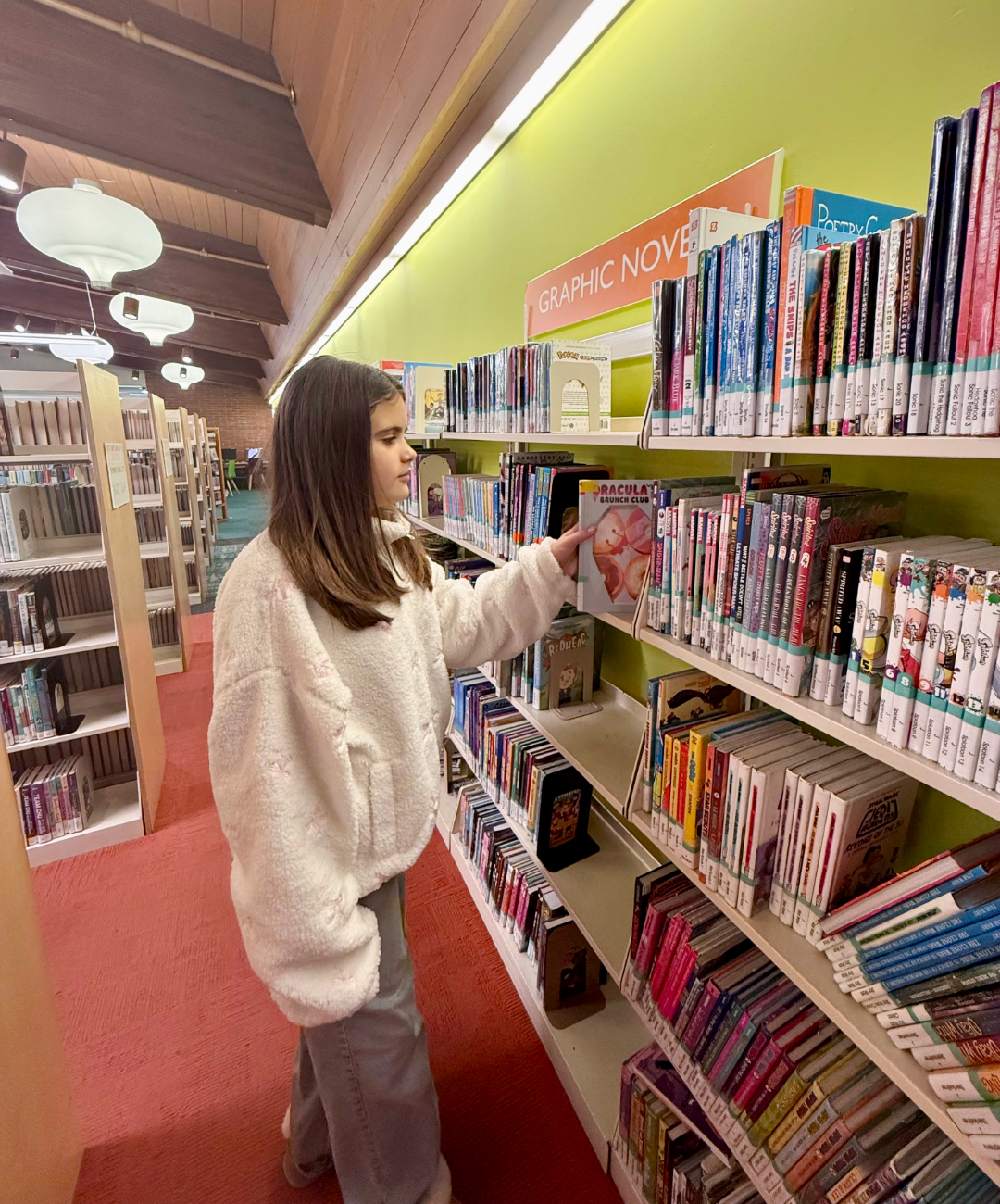
One day, my mom and I were talking about the novels in my backpack. She realized they were not large print. I realized I had been reading normal print for a while without noticing.
She asked me if I was ready to use my library card again. I could not wait. We checked out six books, and I finished them all in one weekend. I was so happy to get my old life back, reading normal paper instead of a monitor, large print books or giant copies.
How are you doing today?
Body
Seeing clearly again has made me proud. For two years, I was not sure it would happen. Now I can read, sleep better, stress less, and focus on school and fun instead of worrying about my vision. I am also not blurry when I look in the mirror anymore, which really helps with applying makeup.
This journey taught me patience and effort. You have to be patient with yourself and put effort into yourself.
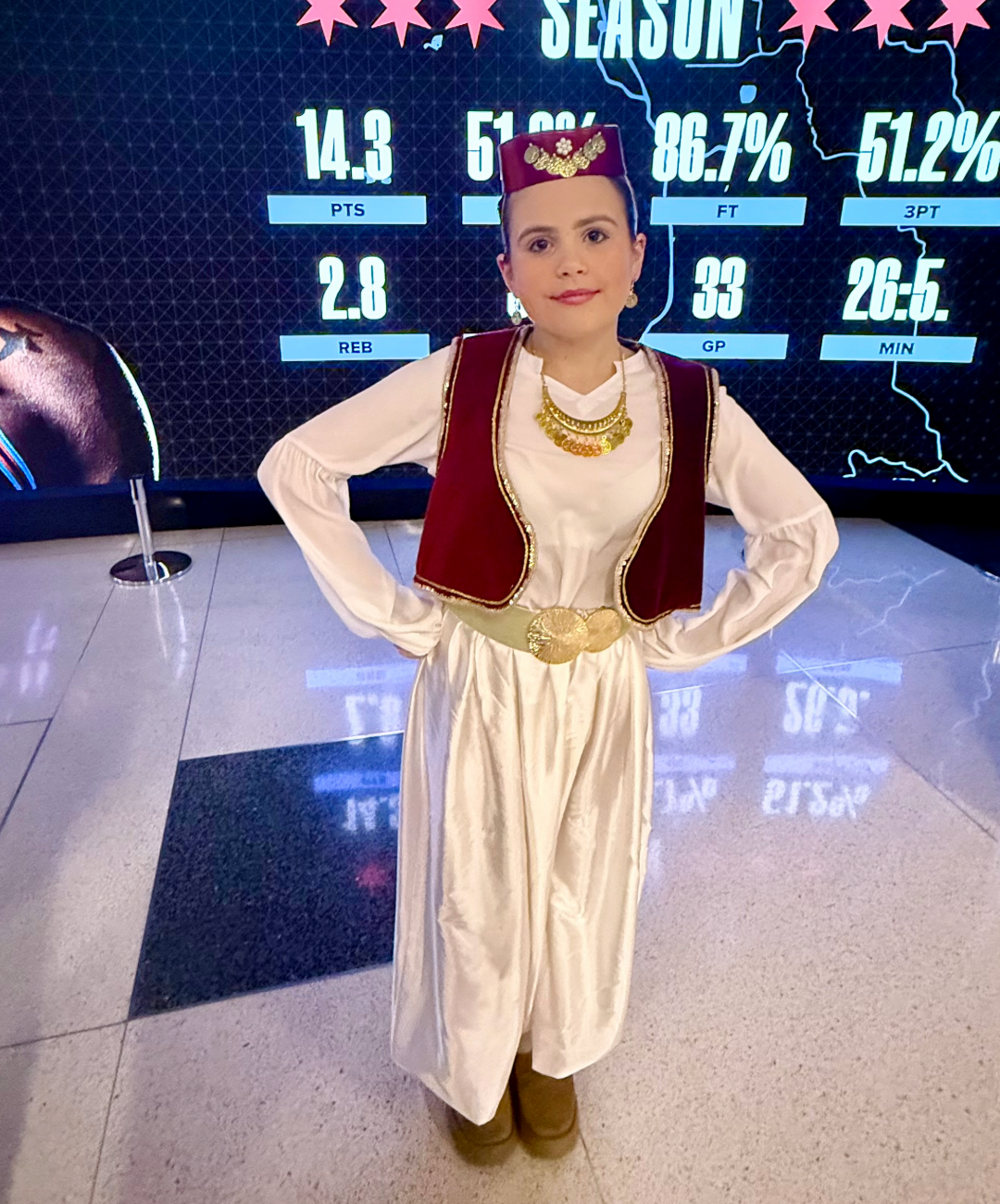
I am proud that I have kept doing the things I love — staying in enrichment reading, competing in Battle of the Books, playing volleyball, performing in a musical, staying in orchestra, keeping my small custom shirts and stickers business going, and dancing with my Bosnian traditional folk dance group. I did not let anything stop me, even when vision challenges slowed me down.
What advice would you give to other parents and kids?
Body
I want parents to understand that kids know when something is wrong with their bodies, even if it is hard for them to explain. Please listen to them, believe them and make sure you and the doctors take the time to explain what is happening in a way kids can understand.
When kids understand what is happening in their bodies, it makes things less scary and easier to deal with. Include kids in the plan for getting better because when we understand what is going on and feel supported, it makes a huge difference in recovery.
I hope kids like me feel inspired after reading my story and feel like they can do the same, no matter what they are dealing with. I also hope they remember to be patient with themselves and put in effort — even in small exercises as they bring big changes, improvements and progress that are worth celebrating, too.